How the offset works
Four steps, in this order. Nothing in them is optional, nothing is added at checkout, and none of it needs anything from you beyond the booking itself.
The tonne is not an average spread across a year and not a block bought in bulk at the end of one. It is funded booking by booking, and the credit is verified before it counts.
- 01You book a room at the live rateThe price on the page is the live rate for the dates you picked. Nothing is added to it for carbon.
- 02IMPT funds one tonne of verified CO₂ offsetEvery single booking funds one tonne, whichever IMPT site it was made from.
- 03The credit is retired against a registered projectThe tonne is matched to a registered climate project and retired there, so the same tonne cannot be counted twice.
- 04The offset is reported on your tripWhat was offset is attached to that journey rather than to a year-end total.
That is the whole mechanism. One booking, one live price, one tonne, reported back against the trip it belongs to.
Why carbon matters here
Kolkata sits between the Hooghly and low, water-rich deltas. Carbon choices here are not abstract. They shape air quality, flood risk and the health of mangroves downstream. This page covers the local picture: the Sundarbans, the East Kolkata Wetlands, heat and cyclones, and practical low-carbon ways to move. Bookings made through IMPT include one tonne of verified CO₂ offset, reported for each trip.
Why carbon matters locally
Kolkata's climate risks are already visible in daily life. Many winter mornings bring poor air quality, especially when traffic and construction dust combine with still air. Summer heat can be severe, and the monsoon brings waterlogging after heavy downpours. Cutting emissions locally does not remove these risks, but it reduces the pressure that makes them worse. It also improves public health, travel comfort and the reliability of city services and infrastructure.
Carbon is also a development question. The city depends on the Hooghly for water, transport and drainage, and on the wider delta for food and protection from storms. Energy use in buildings, transport and industry adds up across a dense urban area. Small shifts, such as using the metro for a daily commute or choosing a ferry instead of a car, matter because they scale across millions of journeys. Visitor choices add to the same pattern.
IMPT reports a one tonne verified CO₂ offset for every booking made through the platform. The offset is included in the price and reported for each trip. That does not remove the emissions of a journey or stay, and it should not be treated as permission to ignore local impacts. The offset sits alongside practical choices: public transport, less waste, careful water use and support for businesses that keep value in the city.
Sundarbans and blue carbon
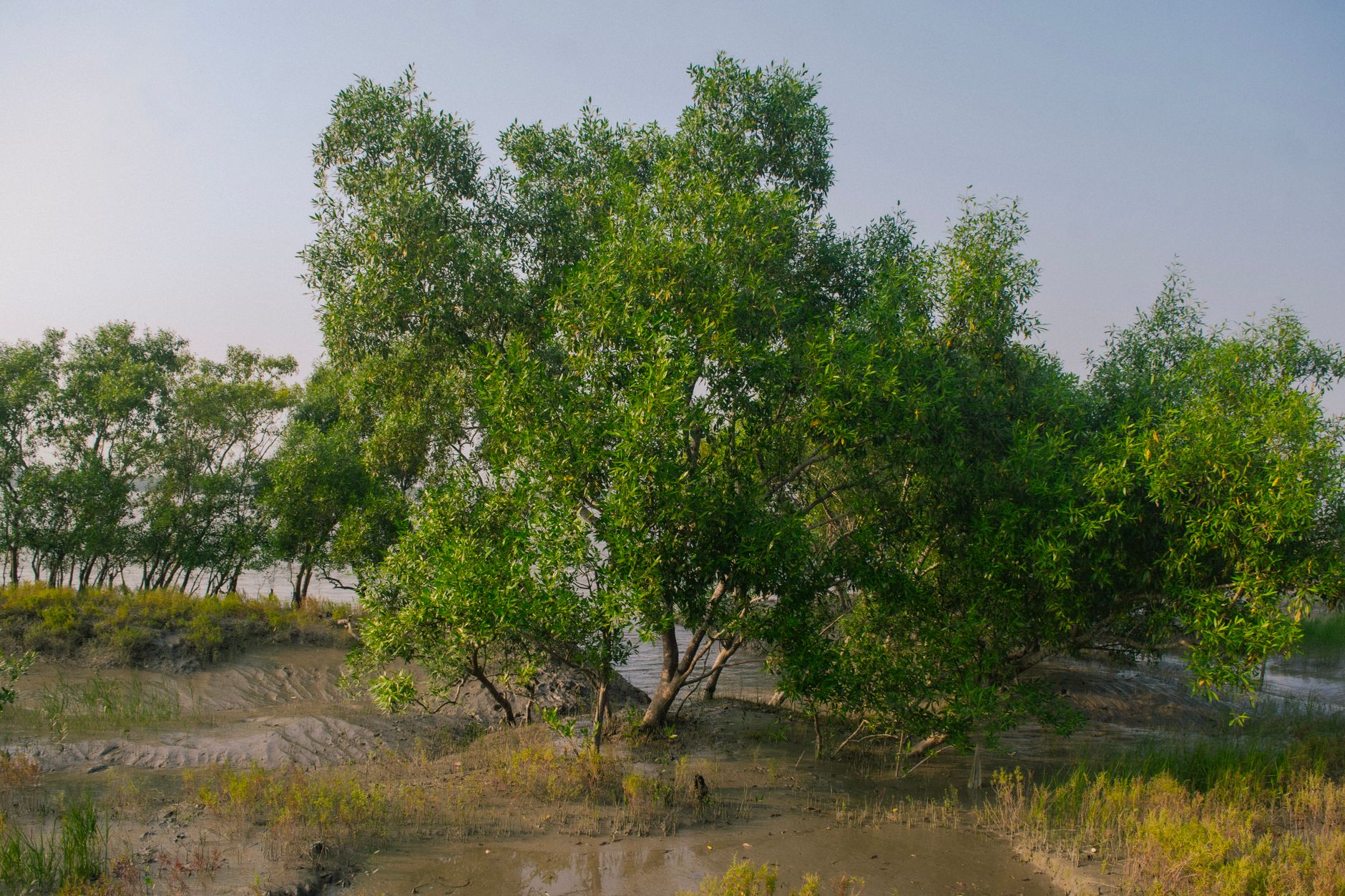
The Sundarbans, shared by India and Bangladesh, is the largest mangrove forest in the world. The Indian Sundarbans National Park is a UNESCO World Heritage Site, inscribed in 1987, and forms part of the Sundarban Biosphere Reserve. The forest sits in the tidal delta of the Ganges, Brahmaputra and Meghna rivers. Its trees and channels absorb wave energy and shelter inland settlements from storm surges. The reserve also holds tigers, crocodiles and birds.
Mangroves store large amounts of carbon in their soils. The soil is the key store. This is often called blue carbon because the storage happens in coastal and tidal systems. The carbon stays in waterlogged sediment for long periods when the forest is left intact. When mangroves are cleared or cut for timber, that stored carbon can be released. Protecting existing forest is therefore more valuable than planting isolated patches after damage.
Visits to the Indian Sundarbans need permits from the West Bengal Forest Department, usually arranged through licensed operators. Boat routes, entry points and daily limits can change, so check current rules with the department before planning. The best months for wildlife and cooler weather are generally November to March, but cyclone recovery and local conditions affect access. Travel in small groups, avoid single-use plastic and follow guide instructions around channels and villages.
East Kolkata Wetlands
The East Kolkata Wetlands lie on the eastern edge of the city. They were designated a Ramsar Wetland of International Importance in 2002. The area is a working landscape of fish ponds, vegetable farms and channels, not an empty reserve. Water from the city flows into these ponds, where sunlight, algae and bacteria break down waste. The wetlands treat a large share of Kolkata's wastewater naturally and return fish and vegetables to city markets.
The wetland system saves the city from building costly treatment plants and reduces pollution entering the Hooghly. It also supports livelihoods in fishing and farming. Pressure comes from filling, construction, waste dumping and changing water flows. Once ponds are filled, the treatment service is lost and cannot be replaced easily. That loss is permanent in practice. Keeping the wetlands wet and connected is a practical climate measure as well as a land-use choice.
Visitors can support the wetlands by treating them as a working area. Ask before taking photographs of people at work, stay on paths and avoid dropping plastic. Birdlife is richest in winter, though access and sightings vary. The wetlands are not a conventional park with fixed visitor facilities, so check current arrangements with West Bengal Tourism or the Kolkata Municipal Corporation before setting out. Combine a visit with nearby places rather than a rushed detour.
Heat, cyclones and the Hooghly
Kolkata's climate is humid and seasonal. December and January are coolest, with highs in the mid-20s Celsius. April and May are hot and humid, often above 35 Celsius, with evening storms. The monsoon runs roughly from June to September, heaviest in July, and brings waterlogging after downpours. October rain tails off, and November is usually dry and comfortable. Winter mornings can be hazy, with poor air quality on many days.
Cyclone Amphan in May 2020 badly damaged the Sundarbans and Kolkata. The storm showed how connected the city is to the delta: embankments, roads, power lines and trees all take damage. Recovery takes years for mangroves and for the communities that depend on them. Climate adaptation means maintaining embankments, restoring mangrove buffers, improving drainage and planning for heat. These are public works, but visitors can respect closures and support local services after storms.
The Hooghly is the city's working river. Ferries link Howrah, Babughat, Shobhabazar, Bagbazar, Dakshineswar and Belur. The river carries freight, passengers and drainage, and its tides affect low-lying areas. Using a ferry is a low-carbon alternative to a road journey and a way to see the riverfront without adding traffic. Services and timings change, so check the current schedule with the relevant ferry authority or West Bengal Tourism before relying on a crossing.
Travelling lighter in Kolkata
The metro is the backbone of low-carbon movement in Kolkata. India's first metro opened in 1984, and the Blue Line runs north to south through Shyambazar, Esplanade, Park Street, Maidan and Kalighat. The Green Line connects Howrah Maidan with Esplanade, Sealdah and Salt Lake Sector V, with the river tunnel opened in 2024. Lines are expanding, so check Metro Railway Kolkata for current stations and hours before planning a route. Services are frequent on core sections.
Suburban trains from Howrah and Sealdah serve the wider region, including trips toward the Sundarbans and Shantiniketan. For short hops, walking is often quickest, especially across the Maidan and around BBD Bagh. Hooghly ferries offer a low-carbon crossing and a different view of the city. The surviving tram network is limited; check before planning a journey. Yellow taxis and app cabs are useful, but in traffic the metro usually wins.
Air travel has the largest carbon cost of any trip to or from Kolkata. Netaji Subhas Chandra Bose International Airport sits near Dum Dum, about 17 km north-east of the centre. The airport is served by Jai Hind Bimanbandar metro station on the Yellow Line, though services are expanding; check Metro Railway Kolkata. For regional trips, trains are often practical. Once in the city, combine metro, walking and ferries to cut road traffic.
- Booking offset: Every hotel booking made through IMPT funds one tonne of verified CO₂ offset, included in the price and reported for each trip.
- Metro first: Use the metro for cross-city journeys, especially the Blue Line through Esplanade and Park Street, and check Metro Railway Kolkata for current services.
- Ferry crossings: Take a Hooghly ferry between Howrah and Babughat or other ghats for a low-carbon crossing, and check current timings before relying on it.
- Wetland care: Keep to paths, carry back plastic and ask before photographing workers when visiting the East Kolkata Wetlands, which function as a working landscape.
- Sundarbans rules: Travel with permitted guides, follow forest department instructions and avoid single-use plastic in the Sundarbans, where access and routes change with conditions.
- Cooler months: Plan outdoor sightseeing for November to February, when heat and humidity are lower, and carry water on all city walks.
The projects behind the credits
The credits are retired against registered climate projects: biogas and biomass on farms, forest restoration and REDD+, wind, solar, hydro and bio-based construction. The list below is read straight from the IMPT project register.
Descriptions come from the register itself and are published in English. Projects in India are shown first; the rest are in the app.


Buy or gift verified offsets
You do not have to book a room to fund a tonne. Both vouchers live in the IMPT app.
Worth knowing: the offset on a booking is funded by the booking. The vouchers are a separate thing you can buy or give away; a stay does not need one.
Carbon in Kolkata: questions
Why does carbon matter in Kolkata?
Carbon emissions affect air quality, heat and the climate risks that shape the city. Kolkata has hazy winter mornings with poor air quality, hot pre-monsoon months and monsoon waterlogging. Lower emissions from transport, buildings and industry reduce pressure on public health and infrastructure. Benefits are local and global, and they add up across millions of daily journeys.
What is blue carbon in the Sundarbans?
Blue carbon is carbon stored in coastal and tidal ecosystems, especially mangrove soils. The Sundarbans, the largest mangrove forest in the world, holds large amounts of carbon in waterlogged sediment. When mangroves are cleared, that stored carbon can be released. Protecting intact forest is therefore a climate measure and a way to reduce storm damage.
Can visitors help protect the Sundarbans?
Visitors can follow forest department rules, travel with permitted guides and avoid single-use plastic. Stay on agreed routes and keep noise low around wildlife. Access, boat routes and permits can change, so check with the West Bengal Forest Department before planning. Small groups and careful spending in local villages help keep tourism useful without adding pressure.
What makes the East Kolkata Wetlands important?
The wetlands were designated a Ramsar site in 2002. Their fish ponds and farms treat a large share of Kolkata's wastewater naturally and supply fish and vegetables to city markets. They also reduce pollution entering the Hooghly. Filling ponds or dumping waste destroys this working system. Protection depends on keeping water flows and land use connected.
How can travellers move around Kolkata with lower emissions?
Use the metro for longer cross-city trips and walk for short hops, especially around the Maidan and BBD Bagh. Hooghly ferries offer a low-carbon river crossing. Suburban trains serve many regional journeys from Howrah and Sealdah. The tram network is limited, so check before relying on it. Check Metro Railway Kolkata for current stations and hours.
Is the metro useful for airport trips?
Jai Hind Bimanbandar metro station on the Yellow Line serves the airport. Services are expanding, so check Metro Railway Kolkata for current stations, hours and connections before planning. The airport is near Dum Dum, about 17 km north-east of the centre. By road, journey times vary with traffic. The metro can avoid congestion when it fits your route.
When is the best time to visit for cooler weather?
November to February is generally the most comfortable period, with lower heat and humidity. December and January are coolest, with highs in the mid-20s Celsius. Winter mornings can be hazy and air quality may be poor. The monsoon runs from June to September and can bring waterlogging. Check the India Meteorological Department for forecasts.
How does IMPT handle carbon offsets?
Every hotel booking made through IMPT funds one tonne of verified CO₂ offset. The offset is included in the booking and reported for each trip. It is a contribution to verified projects, not a substitute for lower-carbon choices on the ground. Using public transport, reducing waste and choosing efficient routes still matter. Each trip carries a clear offset record.
What climate risks affect Kolkata and the delta?
Kolkata faces poor winter air quality, pre-monsoon heat and monsoon waterlogging. Cyclone Amphan in May 2020 badly damaged the Sundarbans and the city, showing how closely the delta and urban area are linked. Adaptation includes embankments, mangrove buffers, drainage and heat planning. Check the India Meteorological Department and Kolkata Police for warnings during storms.
Sources: IMPT project register (platform.impt.io), UNESCO World Heritage Centre, Ramsar Convention Secretariat, India Meteorological Department, West Bengal Pollution Control Board. Editorial review: 3 November 2026.