Kolkata's north-south metro line is the single most useful tool you have with children. It runs from Dum Dum and Belgachia in the north through Esplanade, Kalighat and Rabindra Sarobar to Kavi Subhash in the south, and the air conditioning alone earns its fare in April and May. Trains are frequent, roughly every five to eight minutes off-peak, and platforms are tiled and legible. Buy a stored-value smart card at Esplanade or Kalighat rather than queueing for tokens with a tired child. Off-peak, between about 11am and 4pm, is noticeably calmer than the 9am and 6pm crush.
Start with the metro, it is the fastest way across the city
Kolkata's north-south metro line is the single most useful tool you have with children. It runs from Dum Dum and Belgachia in the north through Esplanade, Kalighat and Rabindra Sarobar to Kavi Subhash in the south, and the air conditioning alone earns its fare in April and May. Trains are frequent, roughly every five to eight minutes off-peak, and platforms are tiled and legible. Buy a stored-value smart card at Esplanade or Kalighat rather than queueing for tokens with a tired child. Off-peak, between about 11am and 4pm, is noticeably calmer than the 9am and 6pm crush.
Small children and folded strollers travel without charge on the metro; a child under about 90cm will simply be lifted through the gate. Stations are stairs-and-escalator affairs, so a lightweight umbrella stroller beats a bulky travel system. The new east-west line adds fast links through Howrah Maidan and Phoolbagan, but interchange at Esplanade involves a walk between two sets of platforms that takes longer than the map suggests. Factor in ten minutes and keep hold of hands in the connecting passages. Announcements are in Bengali and English.
Trams, buses and the ferry: slower, cheaper, better views
The tram network has shrunk but the heritage route along Chowringhee and the run down to Behala still operate and cost very little. Trams are slow, sway a good deal and have no air conditioning, so they work best as a short novelty trip rather than a way of covering distance. Ordinary buses are crowded and not designed for pushchairs; the air-conditioned Volvo services along the main arteries are more comfortable if you need one. For most families I would book a hotel within a ten-minute walk of a metro station and treat buses as a backup.
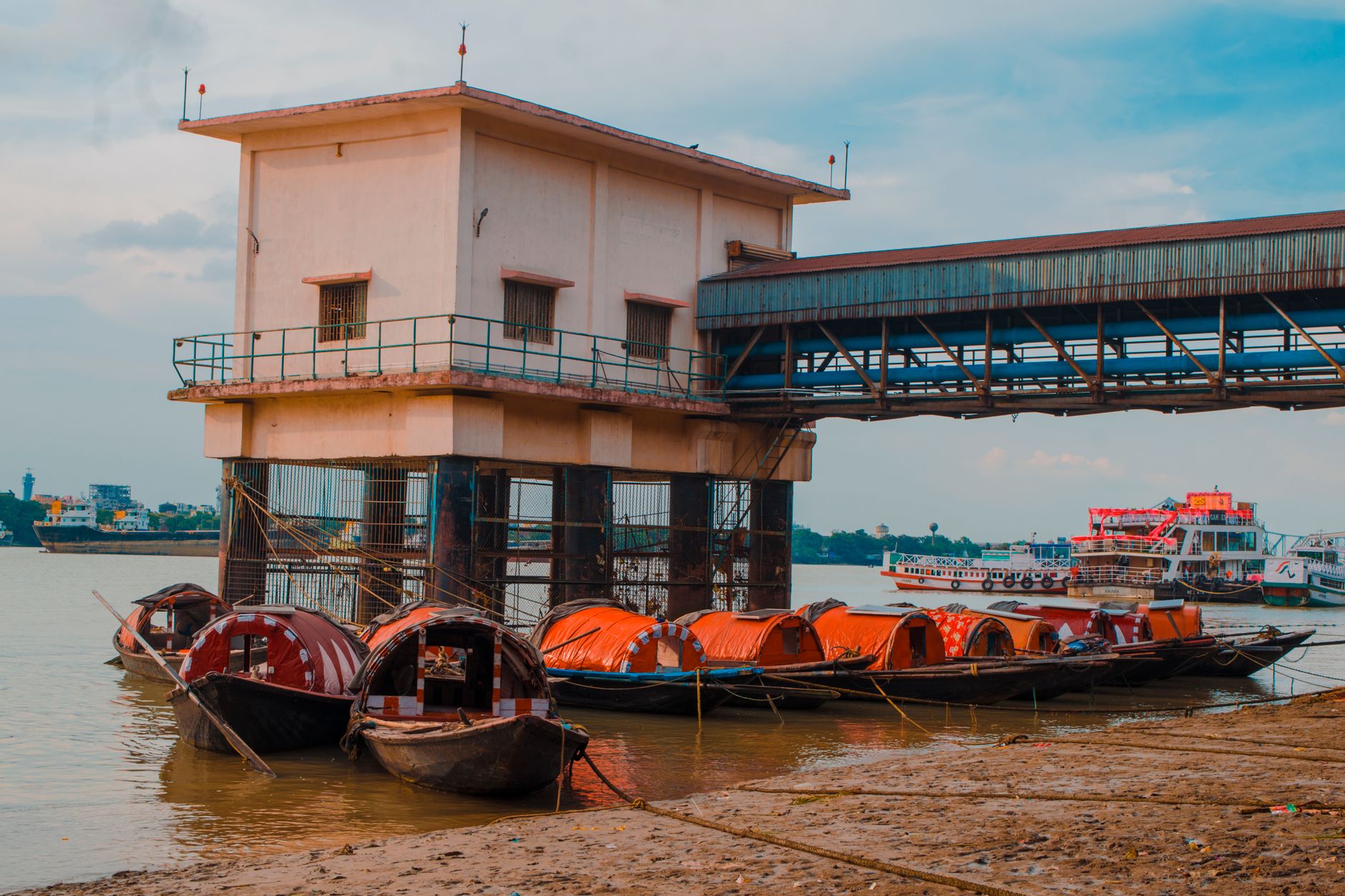
Do take the ferry across the Hooghly at least once. The crossing from the Armenian Ghat area near Howrah to Bagbazar or Fairlie Place takes around fifteen minutes, costs a few rupees, and gives children a clear look at the Howrah Bridge, ghats and working barges. Life jackets are not routinely issued on the ordinary vessels; you may prefer the slightly dearer tourist-oriented launches that dock at Millennium Park. Morning crossings are cooler and calmer. Avoid the ferries entirely during the monsoon high-water days in July and August, when services are suspended at short notice.
Cabs, app cars and the airport run
App-based cabs are cheap by big-city standards and easy to book. A journey from the airport at Dum Dum to central hotels around Sudder Street or Park Street takes twenty-five to forty minutes outside peak hours; allow an hour if your flight lands between 5pm and 8pm. Prepaid taxi counters inside the terminal are reliable and issue a printed slip. For families, book a larger category car rather than a hatchback — luggage for four people plus hand baggage does not fit in the smallest vehicle, and child seats are not standard in any category, so plan to bring a booster for a small child.
The older yellow Ambassador taxis still run on meters, though drivers may quote flat fares for longer trips, particularly to the southern suburbs around Garia or the salt lakes. Toto electric rickshaws fill the gaps in New Town and Salt Lake where cabs are thinner on the ground, but they are open-sided and not suitable for very young children on busy roads. Crossing a major road such as Acharya Jagadish Chandra Bose Road takes patience; use the footbridges near Park Street and Maidan rather than attempting gaps between traffic.
Neighbourhoods, timing and what to skip
Base yourselves centrally if the trip is short. Hotels around Park Street, Sudder Street and the Maidan put you within walking distance of the Indian Museum, the Victoria Memorial grounds and the metro at Esplanade, and the streets are flat and shaded in places. Kalighat and Bhowanipore to the south are quieter and closer to Rabindra Sarobar's lake walks, which is excellent for an early-morning runaround before the heat. North of the city around Shyambazar is lively and close to the old house museums, but pavements are narrow and congested with children in tow.
October to February is the sensible window; March and April become genuinely hot by midday and the May pre-monsoon humidity is draining for small children. Skip the zoo and Nicco Park in the middle of the day and go at opening. Skip the crowded stretch of College Street with a pushchair entirely. And skip trying to see Howrah and the north in the same morning — pick one, use the metro, and leave the afternoon free for a swim.
For booking, I would prioritise a hotel with a pool and a metro station within walking distance over one with a grander address further out. In this city the transport saving is worth more than the view.
FAQ
Is the Kolkata metro easy with a pushchair?
Not fully step-free. Stations have stairs and escalators but few lifts, so bring a lightweight folding stroller you can carry up a flight. Off-peak hours are much easier. Children travel without a separate ticket.
How long does the airport transfer to central Kolkata take?
Allow twenty-five to forty minutes outside rush hour from Netaji Subhas Chandra Bose International Airport to Park Street or Esplanade. In the evening peak, between 5pm and 8pm, budget an hour.
Do taxis in Kolkata provide child seats?
No. Neither the prepaid taxis nor app-based cabs supply child seats or boosters as standard. Bring your own booster if you are travelling with a small child, and book a larger vehicle category for luggage.
When is the best time of year to visit Kolkata with children?
October to February brings the most comfortable temperatures for walking and sightseeing. March and April heat up quickly by midday, and the monsoon from June to September brings heavy rain, flooded roads and occasional ferry cancellations.
Is the Hooghly ferry safe for young children?
The ordinary ferries carry many local commuters daily but do not routinely issue life jackets. Families with young children often prefer the tourist launches near Millennium Park. Crossings are suspended during high-water monsoon days.
Which area should we stay in with kids?
Park Street, Sudder Street and the Maidan area are flat, central and close to the metro, the Indian Museum and the Victoria Memorial. Bhowanipore and Kalighat suit families wanting quieter streets near Rabindra Sarobar's lakeside walks.
Are trams and buses practical for families?
Trams are slow and unairconditioned, better as a short ride than as transport. Ordinary buses are crowded and awkward with a stroller. Air-conditioned buses on main roads are comfortable enough if the metro does not reach your destination.
What should we skip with children in Kolkata?
Skip College Street with a pushchair, skip the zoo and Nicco Park at midday, and skip trying to cover Howrah and north Kolkata in one morning. Choose one area a day and use the metro between them.
Read next
- Best time to visit Kolkata: a month-by-month guide
- Where to stay in Kolkata
- Things to do in Kolkata
- More from the Kolkata blog
Sources: West Bengal Tourism, Metro Railway Kolkata, India Meteorological Department.
Editorial review: 7 November 2026. Opening days, fares and festival dates change; check before you go.