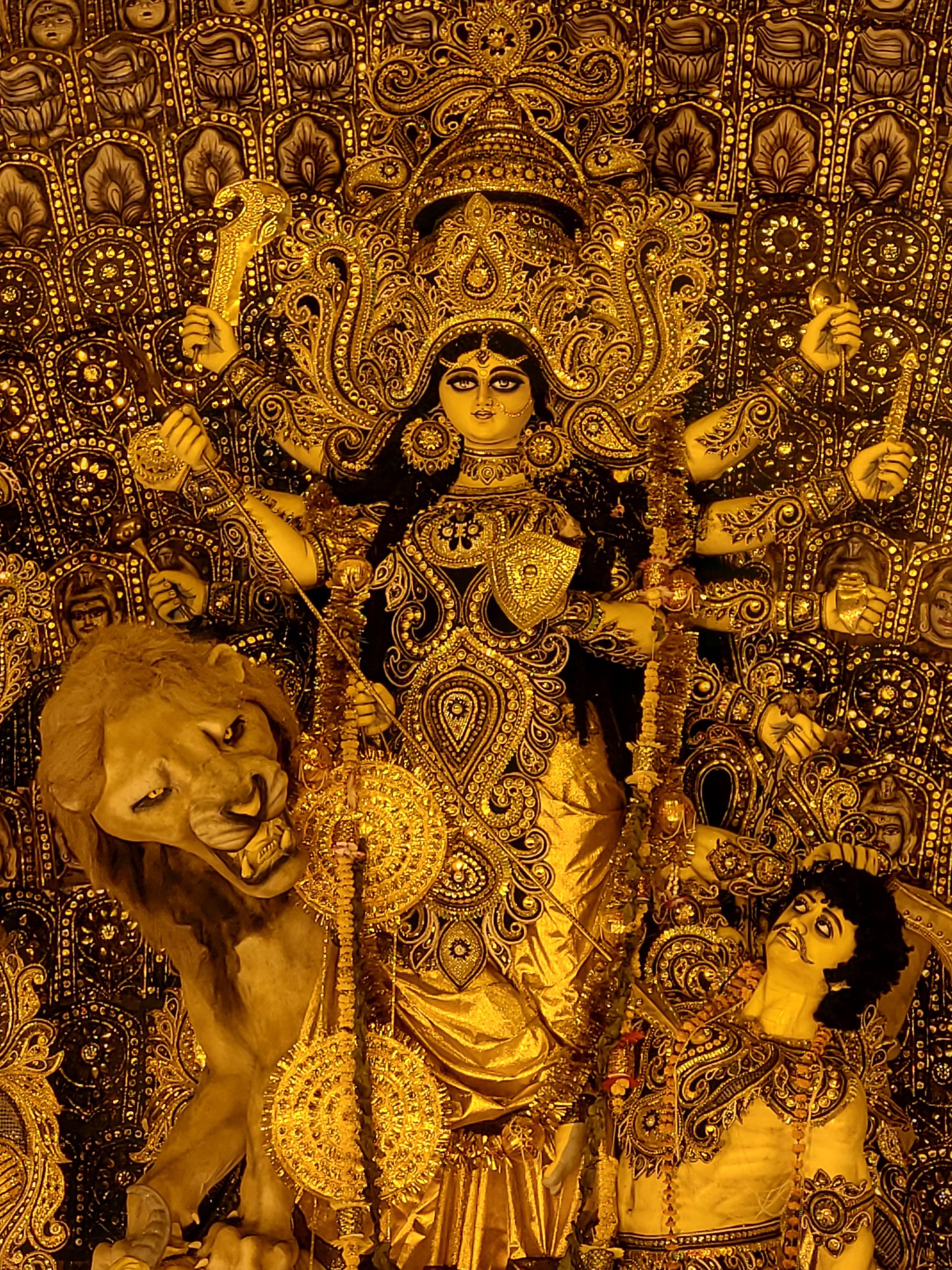
Durga Puja is Bengal’s biggest festival, celebrating the goddess Durga’s victory over the buffalo demon Mahishasura. In Kolkata, thousands of community-built pandals display idols made by local artisans for five main days each autumn, usually in late September or October. UNESCO recognised Durga Puja in Kolkata as intangible cultural heritage in December 2021.
The days of Durga Puja
Where to see pandals
- North Kolkata — tradition: Bagbazar Sarbojanin and Kumartuli Park, near the idol-makers’ quarter; Mohammed Ali Park and College Square in Central Kolkata.
- South Kolkata — theme pandals: Suruchi Sangha, Ekdalia Evergreen, Deshapriya Park and the clubs around Ballygunge and Behala are known for ambitious designs.
- East — Salt Lake: large block pujas with more space to move.
- Bonedi bari pujas: family pujas in old North Kolkata mansions such as Shobhabazar Rajbari, some dating back centuries.
Before the festival: Kumartuli
From around July, the lanes of Kumartuli fill with straw frames being shaped into clay idols. Visit in the weeks before Puja to see artisans at work — be respectful, keep out of the way and ask before photographing. See more in things to do in Kolkata.
Practical tips
- Book months ahead — central hotels sell out and prices rise. Park Street and Esplanade put you on the metro; see where to stay.
- Use the metro — it usually runs extended hours during Puja; roads near famous pandals close to cars.
- Go late or early — crowds peak in the evening; after midnight and early morning are calmer.
- Wear comfortable shoes and carry water; queues at popular pandals can be long.
- Respect rituals — remove shoes where asked and don’t step into ritual areas.
A short history of Durga Puja in Kolkata
Durga is worshipped across India, but Bengal’s autumn puja took its modern form in the households of wealthy landowning families. One of the best-known early celebrations in Calcutta was held at Shobhabazar Rajbari by Raja Nabakrishna Deb in 1757, after the Battle of Plassey; the family puja continues there today. For more than a century, the festival was mostly hosted by such zamindar families in their courtyards.
In the early twentieth century, neighbourhood committees began organising sarbojanin (community) pujas open to everyone, funded by local subscriptions. These grew into the competitive, ambitious pandals of today, with clubs commissioning artists, architects and designers months in advance. In December 2021, UNESCO inscribed Durga Puja in Kolkata on its Representative List of the Intangible Cultural Heritage of Humanity, citing its role in bringing together art, craft and community.
How pandals work
A pandal is a temporary structure, often built from bamboo, cloth, wood and recycled materials, that houses the idol for the festival. Traditional pandals keep a classic look — an idol group of Durga with her children Lakshmi, Saraswati, Ganesh and Kartik, framed by an ornate backdrop called chalchitra. Theme pandals, especially in South Kolkata, recreate temples, palaces or entirely abstract worlds, and many address social subjects. Lighting artists from Chandannagar are famous for elaborate illuminated displays.
Construction begins weeks earlier, and the biggest pandals draw hundreds of thousands of visitors a night. Awards for design, idol, lighting and environmental practice are a matter of real neighbourhood pride.
A three-night pandal-hopping plan
- Night 1 — North Kolkata tradition: Kumartuli Park, Bagbazar Sarbojanin and the family puja at Shobhabazar Rajbari; travel by metro to Shyambazar or Sovabazar.
- Night 2 — Central: Mohammed Ali Park and College Square, then a late snack around College Street.
- Night 3 — South Kolkata themes: Ekdalia Evergreen, Deshapriya Park and Suruchi Sangha, using Kalighat and Rabindra Sarobar metro stations.
Use the metro wherever possible; many roads around famous pandals close to traffic. Expect queues of an hour or more at the best-known pandals in the evening.
Eating during Puja
Food is half the festival. Pandal neighbourhoods fill with stalls selling phuchka, rolls, chowmein, kabiraji cutlets and sweets, and many restaurants run special Puja menus. The traditional bhog — khichuri, labra (mixed vegetables), chutney and payesh — is offered to the goddess and shared with visitors at many community pujas, especially on Ashtami. Carry small change and accept food with your right hand.
What to wear
Locals dress up, often buying new clothes for each day. Saris, kurtas and panjabis are common, with red-and-white saris worn by married women on Dashami. For visitors, light, modest cotton clothing and comfortable shoes are best: you will walk and queue a lot, and some areas require shoes to be removed. Carry a light scarf, water and a small bag worn in front.
After Durga Puja: Lakshmi, Kali and Jagaddhatri
The festive season continues after Dashami. Lakshmi Puja follows within days, then Kali Puja, which coincides with Diwali and brings lamps and fireworks across the city. In November, Jagaddhatri Puja in Chandannagar, an hour up the Hooghly, is famous for its spectacular lighting. If you miss Durga Puja itself, these festivals offer a taste of the same craft and atmosphere.
Rituals to know
- Bodhon: the awakening of the goddess on Shashthi evening, when idols are formally unveiled.
- Kola bou snan: before dawn on Saptami, a banana plant dressed as a bride is bathed in the river and placed beside Ganesh.
- Anjali: morning flower offerings on Ashtami, when families queue at their local pandal before breakfast.
- Kumari puja: worship of a young girl as a living form of the goddess, held at some pujas including Belur Math.
- Sandhi puja: a 48-minute ritual at the junction of Ashtami and Navami, lit by 108 lamps.
- Dhunuchi naach: devotional dancing with smoking clay incense burners to the beat of the dhak drums, usually on Navami night.
- Sindoor khela and bisarjan: on Dashami, married women smear each other with vermilion, then idols are carried to the Hooghly for immersion.
Etiquette and safety in the crowds
- Keep phones and wallets in front pockets or a cross-body bag; crowds are dense and pickpocketing happens.
- Agree a meeting point with your group in case you are separated, as mobile networks can be slow near big pandals.
- Follow police barricades and one-way pedestrian routes — they exist to keep crowds moving.
- Ask before photographing people, especially during rituals, and never use flash on the idol during worship.
- Carry a refillable water bottle, tissues and a small amount of cash; queues for toilets can be long.
Hotels and prices during Puja
Hotel prices in central Kolkata rise noticeably during Puja week, and the best-located properties near the metro sell out early. Book two to three months ahead if you can, choose a base near a Line 1 station such as Esplanade, Park Street or Kalighat, and consider a slightly longer stay to see both the build-up and the immersion. Compare options in where to stay in Kolkata or search live prices below.
If it’s your first Durga Puja
Don’t try to see everything. Choose one area per night, go with someone local if you can, and leave time to simply sit at a neighbourhood pandal and watch — the drumming, the families in new clothes, the evening aarti. Some of the most memorable moments happen at small community pujas away from the famous names, where you may be invited to share bhog or join the dhunuchi dancing. Arrive a day or two before Shashthi to see the city in its final rush of preparation, and stay through Dashami to watch the immersion processions head to the river.
FAQ
When is Durga Puja in Kolkata?
Usually late September or October, following the lunar calendar. Check the current year’s dates before booking.
Is Durga Puja a UNESCO heritage?
Yes — inscribed on UNESCO’s intangible cultural heritage list in December 2021.
What is the best day to see pandals?
Panchami or Shashthi, before the peak crowds of Saptami to Navami, or late at night on any day.
Which neighbourhoods are worth visiting for Durga Puja pandals?
North Kolkata around Shobhabazar, Bagbazar and Kumartuli has older lanes and community pandals. Central Kolkata around the Maidan has large installations. South Kolkata around Kalighat, Ballygunge and Jodhpur Park has many neighbourhood displays. New Town also has displays. Routes and crowd arrangements change each year, so check West Bengal Tourism and Kolkata Police.
Do you need tickets to enter Durga Puja pandals?
Most community pandals are free to enter. Some large or enclosed venues use ticketed queues or ask for voluntary donations, and arrangements change yearly. Check local notices and Kolkata Police advisories before setting out. Queue systems can close temporarily when crowds are heavy.
How do you travel between pandals during Durga Puja?
The Metro is useful for crossing the city, especially on the Blue Line between Shyambazar, Esplanade and Kalighat. Many roads close to traffic in the evenings, so walking is often quicker over short distances. Taxis and app cabs operate but face diversions. Check Metro Railway Kolkata for current hours and Kolkata Police for road closures.
What happens on Dashami, the final day?
On Dashami, the final day of the five main days, idols are taken in procession to the Hooghly for immersion. Roads near ghats become very busy. Sindoor Khela is observed at many pandals earlier in the day. Check the current year's dates and local police advisories before planning a viewing point.
Where can you see Durga idols being made before the festival?
Kumartuli, the potters' quarter in North Kolkata, is where many Durga idols are made. The workshops are busiest from July to September. Go in daylight, keep to the lanes and ask before photographing artisans at work. Access to individual workshops varies, so check locally.
Is photography allowed at pandals?
Outdoor photography is generally allowed at pandals. Avoid flash, ask before photographing people or rituals, and follow notices about tripods or professional equipment. Crowds can make a quick exit difficult, so keep kit simple. Some venues restrict photography during prayers. Check any signs at the entrance.
Read next
- Best time to visit Kolkata — how Puja fits into the year’s weather.
- Park Street area guide — a central, metro-connected base for festival week.
Sources: UNESCO Intangible Cultural Heritage list (2021); editorial review November 2026.