 5★
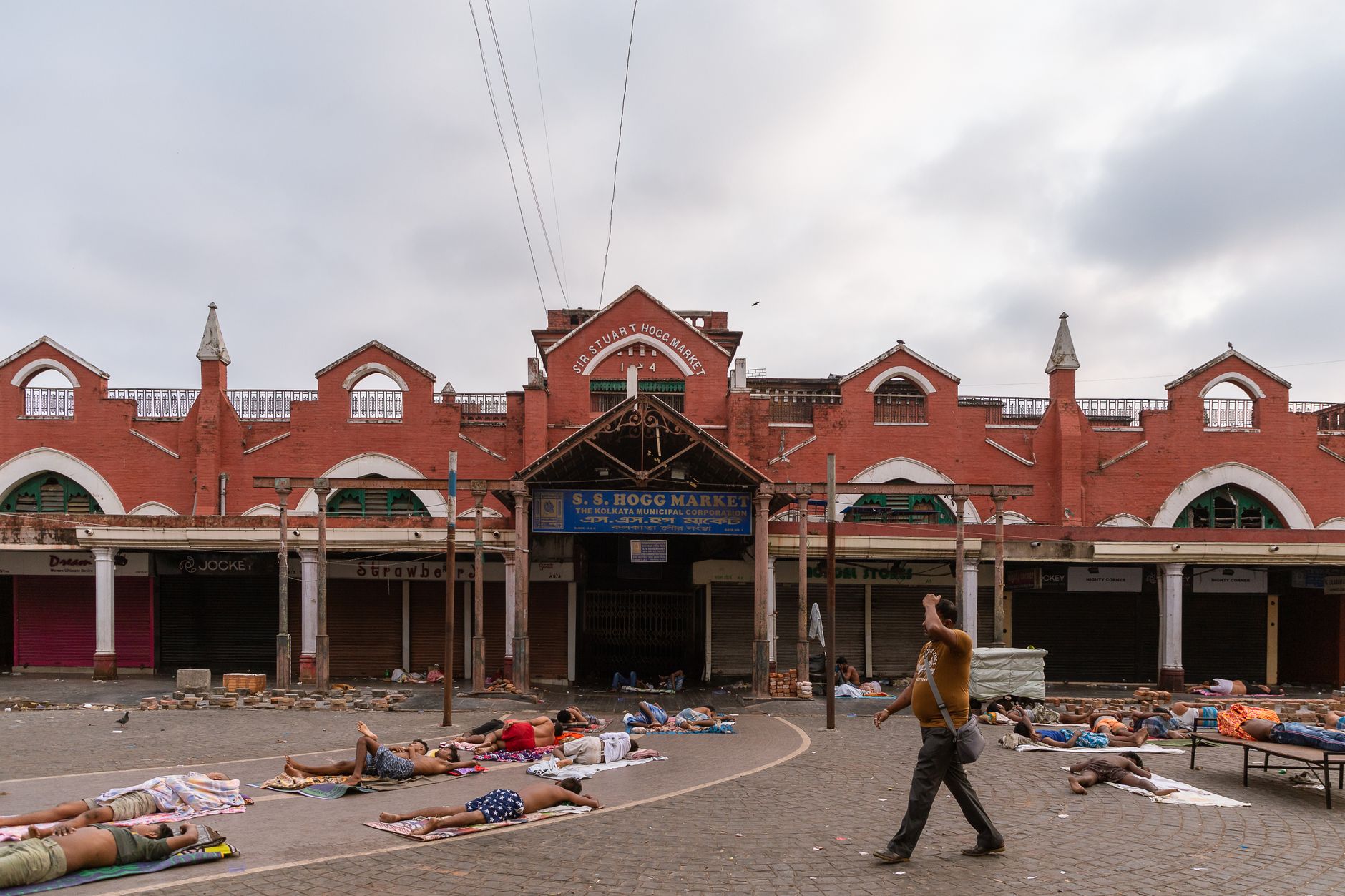
New Market, formally Sir Stuart Hogg Market, is Kolkata's best-known covered market, opened in 1874 in a red-brick hall with a clock tower just off Chowringhee Road. It sells spices, cheese and cold cuts, textiles, leather and bakery goods, including Nahoum's. Esplanade metro is the nearest station. Allow one to two hours; many stalls close on Sundays, so check closing days before a special trip.
What is New Market?
New Market, formally Sir Stuart Hogg Market, opened in 1874 and remains the city's best-known covered market. The red-brick Victorian hall, with its clock tower, stands just off Chowringhee Road, a few minutes from Esplanade. It was laid out for the colonial quarter and named after Sir Stuart Hogg. The hall, its long lanes and the tower are the original Victorian structure, and they still set the shape of a visit today.
Inside, the building divides into covered lanes, each given over to a trade: spices and dry goods, cheese and cold cuts, textiles, leather, shoes, flowers, household goods and bakery counters. The famous stall count is repeated everywhere and is worth treating as market lore rather than a figure to rely on. What helps is the layout. The food sections sit toward one side, cloth and shoes toward the other, and the clock tower gives a fixed point.
How do you reach New Market?
New Market sits in Esplanade, where Chowringhee Road, Lenin Sarani and Bentinck Street meet. Esplanade metro station, on the Blue Line and the Green Line, is the nearest stop, and the walk from the exit takes only a few minutes. Buses run along Chowringhee Road and Lenin Sarani. Yellow taxis usually drop passengers on the Lindsay Street side, which is the busiest way in and the easiest entrance to find.
If you are staying around Park Street, Sudder Street or BBD Bagh, walking is simpler than taking a car for the last stretch, because traffic around Esplanade is heavy through most of the day. Metro lines, stations and interchanges in Kolkata change as extensions open, so check Metro Railway Kolkata before relying on a particular route or entrance, especially if you are coming from Salt Lake or Howrah.
- On foot: From Park Street, Sudder Street or BBD Bagh the market is a straightforward walk north along Chowringhee Road.
- By metro: Esplanade station on the Blue and Green lines leaves a short walk to the Lindsay Street entrance.
- By taxi: Ask for Lindsay Street or New Market; the Hogg Market clock tower is the usual landmark.
- By bus: Services along Chowringhee Road and Lenin Sarani stop within easy walking distance of the hall.
What can you buy at New Market?
The market is strongest on food. Spice stalls weigh out whole and ground masalas, mustard oil, dried chillies and paan ingredients. Cheese and cold-cut counters survive from the colonial supply trade and still sell to the city's bakeries and hotels. Flowers, vegetables and fruit are piled at the edges of the hall. Textile stalls carry cotton, linen and shirting by the metre, and leather shops sell bags, belts and shoes.
Prices in the cloth, shoe and household sections are not fixed, and bargaining is expected there. Food counters generally quote plainly. Buy small quantities unless you know the stall, because quality varies from one shop to the next. Cards and UPI are accepted in more places than before, but cash remains the practical way to pay through most of the hall. Keep purchases in a closed bag as you move between lanes.
- Spices and dry goods: Whole spices, ground masalas, mustard oil and dried chillies are sold by weight at the central counters.
- Cheese and cold cuts: Cured meats, imported cheeses and butter survive here from the colonial-era supply trade.
- Textiles: Cotton, linen and shirting sold by the metre, with tailors working in the streets nearby.
- Leather and shoes: Bags, belts and footwear, with bargaining normal in the shoe lanes.
- Bakery goods: Cakes, pastries and cheese straws from Nahoum's at the far end of the market hall.
Is Nahoum's inside New Market?
Nahoum's, the Jewish bakery founded in 1902, keeps a counter inside the market hall. It is the best-known single shop here and the reason some visitors come at all. Expect rich fruit cake, cheese straws, pastries and, in winter, dense plum cake. Most people buy at the counter and take the box away. Mornings are calmer than mid-afternoon, when the lane outside fills with shoppers and trolleys.
The bakery's survival says something about old Calcutta's trading communities, and its cakes are part of the city's Christmas routine. Particular items run out as the day goes on, so ask what has come out of the oven most recently. Opening days and hours shift with the season and with the market's own schedule, so confirm with the shop before making a special journey across the city.
How do you handle porters and haggling?
Porters, known locally as coolies, work the entrances and will offer to carry purchases or lead you to a particular stall. Some expect payment for guiding as well as for carrying. A polite refusal is enough and needs no explanation. If you do accept help, agree the amount before you set off, so that nothing is left to argue about at the end of the walk through the lanes.
Bargaining works in the cloth, shoe and household sections. Ask the price, offer a little lower, and settle at a figure you are content with. Walking away is a normal part of the exchange, not a discourtesy. In the food halls and at Nahoum's, prices are usually quoted and haggling sits badly. Anyone who attaches themselves to your walk and starts giving directions unasked expects money for it.
- Decline porters politely: A short no thank you is enough, and no reason needs to be given.
- Agree before you accept: If a porter carries your bags, settle the amount at the entrance first.
- Bargain where expected: Cloth, leather and shoes are negotiable; food counters and bakery goods usually are not.
- Keep bags closed: The crowded lanes are pickpocket territory, so wear a bag across the body.
When is the best time to visit?
Mornings are the best time. The hall is coolest, the produce is freshest and the aisles are still passable before the afternoon crowds arrive. From mid-morning the lanes fill and movement slows to a shuffle. November to February is the comfortable season in Kolkata, with cool mornings and dry days. April and May are hot inside the covered hall, where fans move the air without cooling it.
The monsoon, roughly June to September, brings waterlogging to the streets around Esplanade after heavy downpours, and the walk in can turn messy. Check the India Meteorological Department forecast before a market trip in those months. Many stalls close on Sundays, so a weekday or a Saturday is the safer choice. Traders set their own closing days, so confirm the current pattern before travelling across the city.
Where can you eat near New Market?
Nizam's, a short walk from the market, is credited with the original kathi roll and is the obvious stop for a quick meal. On Park Street, Flurys, Peter Cat, Mocambo and Trincas are all within walking distance for a sit-down meal after the market. The Indian Coffee House on College Street pairs naturally with a book-buying walk, though it is further away and better saved for another morning.
Inside the market, most food is to take away: bread, cheese, sweets, fruit and cake. Phuchka and jhalmuri stalls gather on the surrounding pavements in the late afternoon. For a full Bengali meal, look toward Esplanade and Chowringhee rather than the hall itself. The lanes are narrow and busy with trolleys, so eat where you can stand clear of the traffic rather than in the middle of an aisle.
What else is near New Market?
The market sits in the middle of the old commercial city. BBD Bagh, with Writers' Building, the GPO and the Calcutta High Court around Lal Dighi, is a short ride or a walk away. The Indian Museum on Chowringhee Road is close. The Victoria Memorial is further south along the Maidan, and Park Street's restaurants and Christmas lights are within walking distance of the market's Lindsay Street side.
Allow one to two hours for the market itself, longer if you are buying cloth or Christmas supplies. It combines well with a BBD Bagh heritage walk in the morning and Park Street in the evening. For a half day, pair it with the Indian Museum, which closes on Mondays, and the Victoria Memorial, whose museum also closes on Mondays and some national holidays.
Hotels in Esplanade & BBD Bagh
For New Market, the nearest hotel area is Esplanade & BBD Bagh, with 35 stays in the IMPT hotel database. Listed 5-star first, then 4-star, then by guest score; live prices open in the IMPT app.
5★ 5★
 4★
 4★
 3★
 3★
FAQ
What is New Market in Kolkata?
New Market, formally Sir Stuart Hogg Market, is the city's best-known covered market, opened in 1874 in a red-brick Victorian hall with a clock tower just off Chowringhee Road. It sells spices, cheese and cold cuts, textiles, leather, shoes and bakery goods. It is a working market rather than a shopping centre, and the lanes are narrow and busy.
When did New Market open?
The market opened in 1874 and is named after Sir Stuart Hogg. The red-brick hall and its clock tower are the original Victorian structure, and the covered lanes still follow the nineteenth-century layout. The building has been repaired and altered over the years, but the hall is recognisably the one the city has used for well over a century.
Is Nahoum's inside New Market?
Yes. Nahoum's, the Jewish bakery founded in 1902, keeps a counter inside the market hall and is the best-known shop here. It sells rich fruit cake, cheese straws, pastries and, in winter, plum cake. Most visitors buy and take away. Items sell out through the day and hours vary, so check with the shop before a special trip.
Is New Market closed on Sundays?
Many stalls close on Sundays, but the hall is not shut as a whole and some traders open. The pattern changes with the season and between individual shopkeepers, so confirm locally before travelling across the city for a particular counter. A weekday morning is the more reliable choice, and Saturday is busier but usually complete.
Do you need to bargain at New Market?
Bargaining is expected in the cloth, shoe, leather and household sections, where prices are not fixed. Ask the price, offer a little lower and settle on a figure you are happy with. In the food halls, at the cheese counters and at Nahoum's, prices are quoted plainly and haggling is out of place.
How long does a visit to New Market take?
Allow one to two hours for the hall and the lanes around it. That covers a walk through the food sections, a stop at Nahoum's and a look at the cloth and shoe stalls. Add time if you are buying textiles, ordering cakes or comparing prices. Serious shoppers can spend half a day inside the building.
How do you reach New Market by metro?
Esplanade metro station is the nearest stop, on the Blue Line and the Green Line, and the walk from the exit takes a few minutes. From Park Street, Sudder Street or BBD Bagh the market can be reached on foot. Check Metro Railway Kolkata for current stations, hours and interchanges, since lines and entrances change as extensions open.
What should you buy at New Market?
Spices and dry goods, mustard oil, cheese and cold cuts, textiles by the metre, leather bags and shoes, and bakery goods from Nahoum's. Flowers, fruit and vegetables are sold at the edges of the hall. Buy small quantities unless you know the stall, since quality varies between shops and there is no return once you have left.
Are the porters at New Market worth hiring?
Porters at the entrances will carry purchases or lead you to a stall and expect payment for it. Hiring one makes sense if you are buying heavy goods such as potatoes, cloth or crockery. Otherwise decline politely, which needs no explanation, and agree the amount first if you do accept help.
Read next
Sources: West Bengal Tourism, Kolkata Municipal Corporation, Metro Railway Kolkata, India Meteorological Department.
Editorial review: 3 November 2026. Opening days, fares and festival dates change; check before you go.