 5★
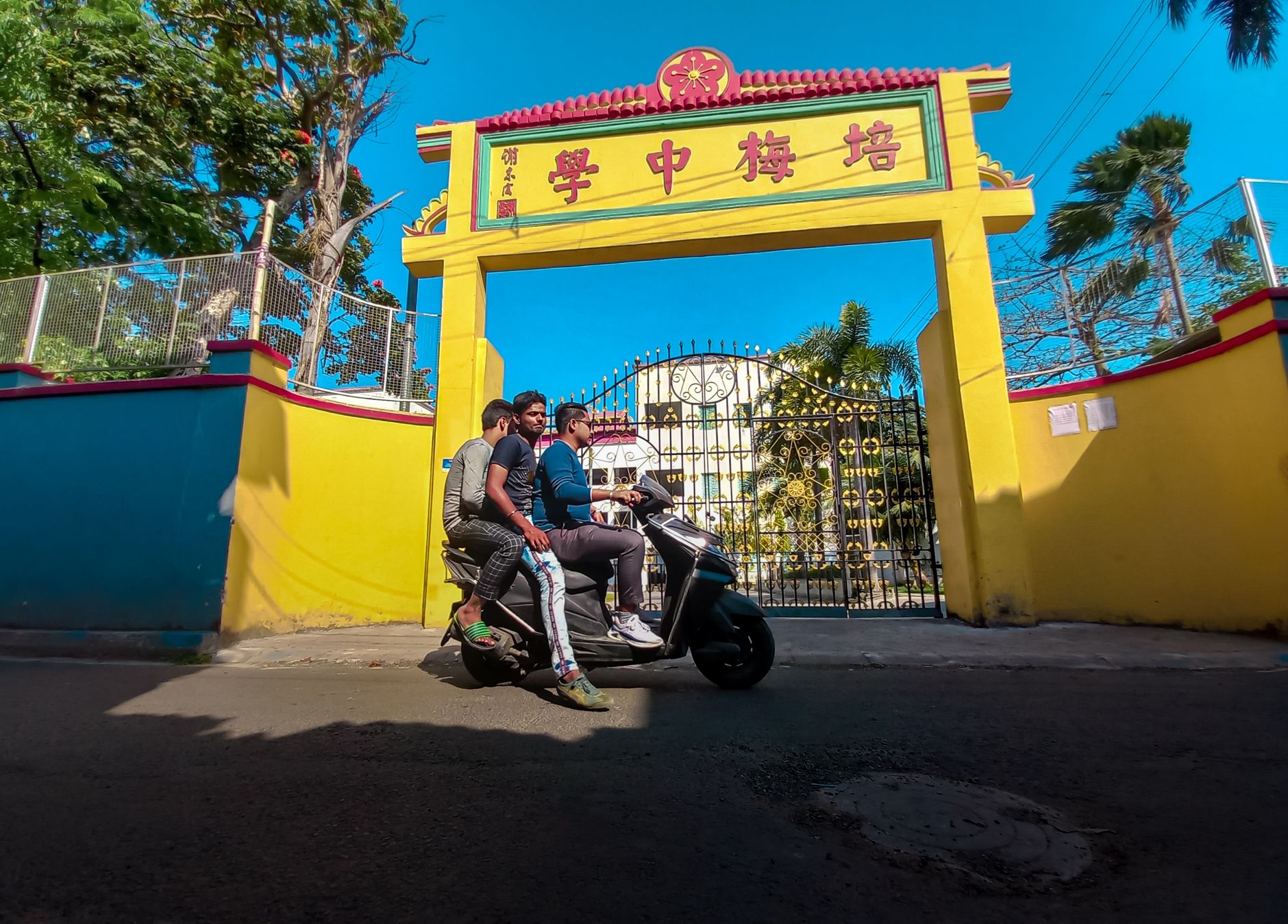
Tangra is east Kolkata's Indian-Chinese restaurant district, the descendant of a leather-tannery neighbourhood where Chinese families settled. Tiretta Bazaar, near Poddar Court and Bowbazar, is the older Chinatown, and its lanes hold two Chinese temples plus a breakfast market that runs from dawn to mid-morning only. Go to Tiretta Bazaar early and Tangra in the evening. Check current opening days before travelling.
Where is Kolkata's Chinatown?
Kolkata has two Chinese quarters and they sit at opposite ends of the old city. Tiretta Bazaar, near Poddar Court and Bowbazar, is the older settlement: a tight grid of lanes behind the office district. Tangra lies east of the centre, close to Salt Lake, and holds the restaurants most people mean when they talk about Chinese food in Kolkata. Both are working neighbourhoods rather than sights. Expect ordinary street life, narrow lanes and no ticket counter at either.
The community dates from the late eighteenth century, when Chinese traders and craftsmen settled near the river and later took work in the leather trade. Tiretta Bazaar grew around that first settlement. Families moved east to Tangra for the tanneries. Descendants of both groups still live in the city, and the two quarters tell different halves of the same story. Allow half a day for each, and more if you plan to eat properly.
What happens at the Tiretta Bazaar breakfast?
Tiretta Bazaar's breakfast market is the reason most visitors come to this part of the city. Stalls open before dawn in the lanes of the old Chinese settlement and sell steamed buns, dumplings, fried dough and warm soy milk to a mixed crowd of residents and traders. The market is a morning affair. By mid-morning most stalls have packed up and the same lanes look ordinary. Arrive at first light for the widest choice.
Nothing here is formal. You take a stool where there is space, order by pointing at what is being steamed, and eat quickly. Portions are small, so order across two or three stalls rather than settling at one. Carry cash, since card machines are rare at this level of trade. Stalls keep their own hours and the market thins in rain, so treat any timetable as a guide and arrive early.
- Steamed buns: Soft white buns with pork or vegetable filling are the standard opener at the breakfast stalls.
- Dumplings: Small steamed dumplings come by the plate, usually with a sharp chilli sauce on the side.
- Fried dough: Long sticks of fried dough are eaten with soy milk or rice porridge early in the morning.
- Sweet soy milk: Warm soy milk is the usual drink, and stalls sell it by the cup through the morning.
Which Chinese temples can you visit?
Two Chinese temples stand in the lanes of Tiretta Bazaar. Sea Ip Church and Toong On Church are small, active places of worship rather than museum pieces, and the word church is the local English usage for what are in practice Chinese temples. Both sit among ordinary houses and shops, easy to walk past. Entry is free. Check current opening arrangements before setting out, since worship takes priority over visitors.
Inside, the mood is quiet: red and gold fittings, incense, and altars tended by the families who keep them. Remove your shoes where others do, ask before photographing, and keep voices low. The temples are busiest around Chinese New Year and on festival days, when the lanes fill and lion dancers pass through. Outside those times there may be no other visitor at all. Mornings are the calmest time to look inside, before the shops around them open fully.
How did Tangra become Chinese Kolkata?
Tangra's Chinese story begins with leather. Chinese families settled here to work in the tanneries that once lined the eastern edge of the city, and the neighbourhood became a self-contained quarter with its own kitchens, clubs and festivals. The work was hard and the smells were notorious. The food that visitors now travel for began as family cooking for a community that lived and worked in the same few streets.
Over the following decades the tanneries were moved out of the city to a dedicated leather complex, and the old sheds gave way to homes and workshops. Rather than leaving, many families stayed and turned to restaurants, which is why a residential district now doubles as the city's Indian-Chinese dining quarter. The cooking is neither Cantonese restaurant food nor mainland Chinese food. It is a Kolkata version of both, built on soy, chilli, garlic and generous sauce.
What should you eat in Tangra?
Tangra restaurants serve Indian-Chinese food, a style cooked across urban India and shaped here by Chinese families over generations. Expect chilli chicken, Hakka noodles, Manchurian in gravy or dry, hot and sour soup, and prawns with garlic. The cooking is sauce-led and generous rather than delicate. Portions suit sharing, and a table of four can order three dishes and still leave food on the table. Rice and noodles are ordered separately from the main dishes.
Menus run long, so ask what the kitchen does well rather than ordering across the list. Most places cook vegetarian versions of the same dishes, and Hakka noodles with vegetables is a reliable test of a kitchen. Some also list hotter Sichuan-style items. Look at what other tables are eating. If a dish arrives dry-fried with green chilli, order rice or noodles alongside it rather than eating it alone.
- Chilli chicken: Battered chicken tossed with onion, capsicum and green chilli, served dry or with gravy.
- Hakka noodles: Thin noodles stir-fried with egg or vegetables, the usual base for a shared table.
- Manchurian: Fried vegetable or chicken balls in a tangy brown sauce, ordered as a starter or a main.
- Hot and sour soup: A pepper-heavy soup that opens most meals in Tangra and suits a cool evening.
How do you get to Tangra?
Tangra sits east of the centre, near Salt Lake and the Eastern Metropolitan Bypass. There is no metro station at the door. App cabs and yellow taxis are the simplest way in, and the run from Park Street crosses the middle of the city, so allow for traffic. The Green Line towards Salt Lake Sector V brings you within a cab ride of the restaurants. Check Metro Railway Kolkata for current services before relying on any route.
Tiretta Bazaar is easier on foot. Central on the Blue Line is the nearest metro stop, and the lanes begin a short walk from Poddar Court. Esplanade is a longer but level walk. Come out early, cross the main roads with care, and use the lanes rather than the arterial roads where there is no pavement to speak of. Morning congestion around BBD Bagh is heavy, and yellow taxis and app cabs both serve the area, though walking is quicker between the lanes.
- Metro to Tiretta: Central on the Blue Line is the closest station; Poddar Court and the lanes are a short walk.
- Metro to Salt Lake: Green Line services towards Salt Lake Sector V leave a cab ride to Tangra; check current stations.
- By cab: App cabs and yellow taxis both run to Tangra and Tiretta Bazaar; simply ask for Tangra.
When is the best time to go?
Tiretta Bazaar belongs to the morning. The breakfast market starts before dawn and is largely finished by mid-morning, so plan to arrive at first light and treat anything later in the day as a bonus. Weekday mornings are calmer than weekends. Rain empties the lanes quickly. If Chinese New Year falls in your travel window, in late January or February, the quarter becomes the centre of the city's celebrations. Check the current year's dates before planning around it.
Tangra works for both lunch and dinner, with dinner the busier service. Restaurants open through the week, though individual kitchens keep their own closing days, so check before a long journey across the city. October to March is the comfortable season for both quarters. In the monsoon, east Kolkata is prone to waterlogging after heavy rain, and a planned evening in Tangra can be spoiled by a stalled cab on the bypass.
What pairs well with a Tangra trip?
A Tangra evening combines well with Salt Lake and New Town, where parks and the science museum fill an afternoon before dinner. Eco Park in New Town is a large open space for a cool morning, and Science City on the bypass suits families. None of these is next door, but they sit on the same side of the city, so one cab ride links them and saves a return to the centre.
Tiretta Bazaar pairs with the old business district. A heritage walk around BBD Bagh, the Writers' Building and the High Court finishes close to the Chinese lanes, and New Market is a short ride away. Park Street, College Street and Kumartuli are all reachable by metro or cab for the rest of the day. Keep the breakfast market as the first stop and build everything else around it. Weekday mornings are quietest for the walk.
Hotels in Salt Lake
For Tangra & Tiretta Bazaar, the nearest hotel area is Salt Lake, with 293 stays in the IMPT hotel database. Listed 5-star first, then 4-star, then by guest score; live prices open in the IMPT app.
5★ 5★
 4★
 4★
 4★
Monotel Luxury Business Hotel
Salt Lake, Kolkata · 4-starGuest score 4.1/5 · 6559 reviewsSee live price 4★
FAQ
Is Tangra the same as Kolkata's Chinatown?
Partly. Kolkata has two Chinese quarters. Tiretta Bazaar, near Poddar Court and Bowbazar, is the older settlement and holds the breakfast market and two Chinese temples. Tangra, east of the centre near Salt Lake, grew around the leather tanneries and is now the restaurant district. Both are residential areas, and neither is a rebuilt heritage zone.
What time does the Tiretta Bazaar breakfast market open?
Stalls start before dawn and the market is largely over by mid-morning. That is the pattern rather than a fixed timetable, since each stall keeps its own hours and rain can empty the lanes. Aim to arrive at first light for the widest choice, and do not plan a late lunch there on the strength of the breakfast trade.
Can you go inside the Sea Ip and Toong On churches?
Both are working places of worship in the Tiretta Bazaar lanes, and visitors are generally welcome outside prayer times. Behave as you would in any temple: remove your shoes where others do, ask before taking photographs, and keep quiet. Opening arrangements change, so check locally or with West Bengal Tourism before making a special trip.
Which dishes should you order on a first visit to Tangra?
Start with chilli chicken, Hakka noodles and a Manchurian dish, the three pillars of the Kolkata Indian-Chinese table. Add hot and sour soup if the weather is cool, and a prawn dish if the kitchen cooks it fresh. Portions are large, so three dishes will feed four people comfortably. Ask what is cooked that day rather than working down a long menu.
How do you reach Tangra from Park Street?
By road, most directly. App cabs and yellow taxis run east across the city to Tangra, close to the Eastern Metropolitan Bypass, and the journey crosses the centre, so allow for traffic. The alternative is the Green Line to Salt Lake Sector V and a cab from there. Check Metro Railway Kolkata for current services, since lines are still being extended.
Is Tiretta Bazaar worth visiting outside breakfast hours?
The lanes are ordinary working streets later in the day, and the food stalls fold up. What remains is the older Chinese settlement: two temples, a few shops and the grid of lanes itself. Pair a late walk with the BBD Bagh heritage circuit, which is close by. The breakfast market is the main reason to come early, so build the day around it.
What is the difference between Hakka and Sichuan dishes in Kolkata?
In Kolkata, Hakka usually means the stir-fried, sauce-led cooking associated with Chinese families here: noodles, chilli chicken, Manchurian. Sichuan on a menu generally signals more chilli and pepper heat. Neither is a strict regional cuisine. Both are Indian-Chinese versions shaped by local taste, and kitchens in Tangra interpret them differently, so ask before ordering the hottest item.
When is Chinese New Year celebrated in Kolkata?
Chinese New Year falls in late January or February, following the lunar calendar, so check the current year's dates. Tiretta Bazaar is the centre of the celebrations, with lion dances, decorations and food stalls through the lanes. Expect crowds at the temples and heavy demand at the food stalls. Tangra marks the festival too, mostly in its restaurants. Confirm the programme locally before travelling across the city.
Is it safe to walk around Tiretta Bazaar early in the morning?
The lanes are busy with traders and breakfast trade from first light, and walking is normal. Keep to the main lanes before sunrise, carry a torch in winter, and watch for delivery vehicles and open drains. Kolkata is generally a calm city for visitors, but take the usual care with bags in crowds. Kolkata Police numbers and local advice are worth having on hand.
Read next
Sources: West Bengal Tourism, Kolkata Municipal Corporation, Metro Railway Kolkata, Kolkata Police.
Editorial review: 3 November 2026. Opening days, fares and festival dates change; check before you go.