 5★
What it is
Victoria Memorial was proposed by Lord Curzon after Queen Victoria’s death in 1901 and designed by the architect William Emerson, blending British classical forms with Mughal elements. Built from white Makrana marble from Rajasthan — the same quarries used for the Taj Mahal — it opened in 1921 and today is a museum run under India’s Ministry of Culture.
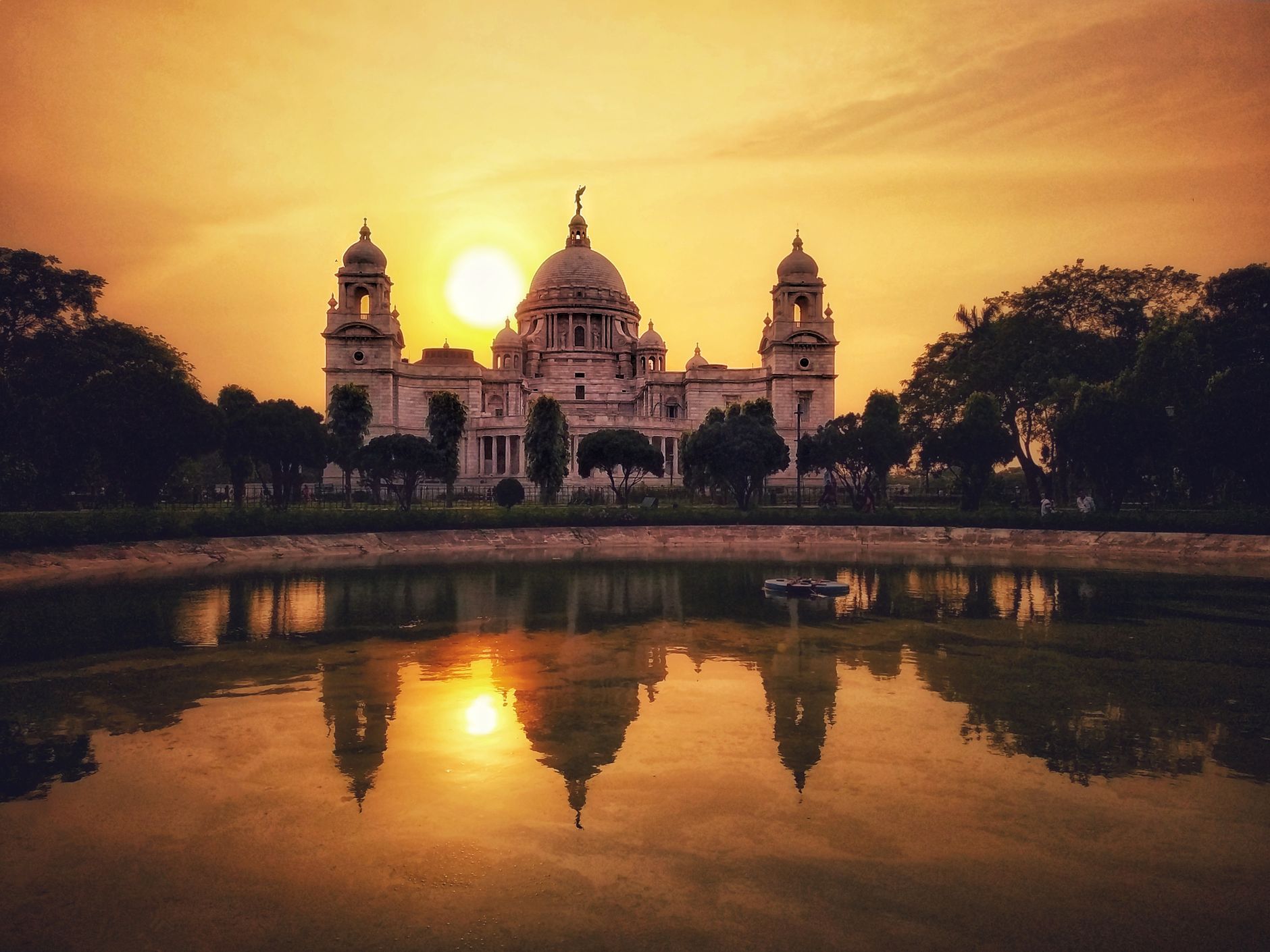
The bronze Angel of Victory on the central dome is one of Kolkata’s most recognisable silhouettes, and the 64-acre grounds are the city’s favourite place for an evening walk.
What to see inside
- The Calcutta Gallery — the city’s story from trading post to imperial capital.
- Paintings — works by Thomas and William Daniell and other artists who documented eighteenth-century India.
- The Queen’s Hall — under the dome, with murals of Victoria’s life.
- The gardens — statues, ponds and the classic reflection view from the north side.
Planning your visit
- Opening days: the museum is closed on Mondays and some national holidays. Hours and fees change — confirm on the official website.
- Tickets: buy at the gate or online; garden-only and museum tickets are separate, with different rates for Indian and foreign visitors.
- Best time: arrive mid-afternoon, see the galleries while it’s hot, then walk the gardens in the golden hour.
- Getting there: metro to Maidan, or a short taxi from Park Street.
- Etiquette: photography rules differ inside the galleries; check the signs.
Nearby
St Paul’s Cathedral is next door; Birla Planetarium and the Academy of Fine Arts are a few minutes’ walk; the Maidan stretches north towards Esplanade, and Prinsep Ghat is a short ride west for sunset on the river.
History of Victoria Memorial
After Queen Victoria died in January 1901, the Viceroy, Lord Curzon, proposed a memorial in Calcutta, then the capital of British India. Funds came largely from public subscriptions and Indian princely states. The architect was Sir William Emerson, president of the Royal Institute of British Architects, with Vincent Esch supervising construction. The foundation stone was laid in 1906 by the Prince of Wales, later King George V, and the memorial opened to the public in 1921 — ten years after the capital had moved to Delhi.
Since independence it has been a national museum administered under the Ministry of Culture, with galleries reinterpreted to tell the story of the city and of India’s freedom movement as well as the colonial period.
Architecture and design
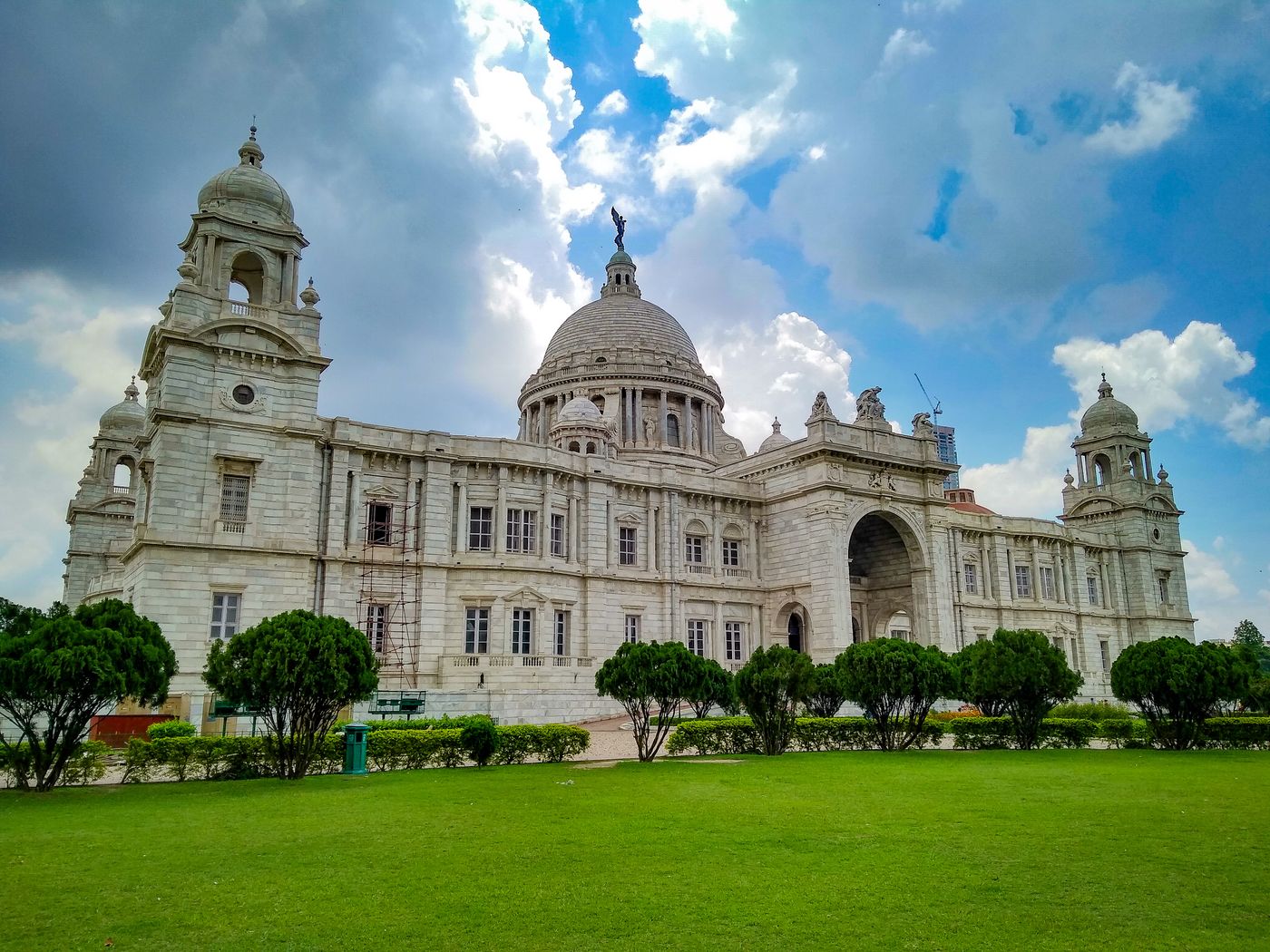
Emerson combined Italian Renaissance and British classical forms with Mughal elements such as domes, chhatris and arched recesses. The building is clad in white Makrana marble from Rajasthan, the same source used for the Taj Mahal. On top of the central dome stands the bronze Angel of Victory, which was originally mounted to turn with the wind.
Around the dome are allegorical sculptures representing Art, Architecture, Justice and Charity, while the porches carry figures of Motherhood, Prudence and Learning. The 64-acre gardens include ponds, avenues and statues of figures from the colonial era.
The galleries in more detail
- Royal Gallery: portraits and personal objects connected with Queen Victoria and her family.
- Portrait Gallery: paintings of governors-general, administrators and Indian personalities of the period.
- Calcutta Gallery: the city’s growth from three villages — Sutanuti, Gobindapur and Kalikata — into an imperial capital, told through maps, prints and models.
- Paintings collection: one of the largest holdings of works by Thomas and William Daniell, whose aquatints shaped European images of India.
- Queen’s Hall: under the dome, with murals of Victoria’s life and a statue of the young queen.
Exhibits rotate and some galleries close for renovation, so check what’s open on the official website before you visit.
Photography tips
- The classic shot is from the north side across the pond, ideally in the soft light of late afternoon.
- The south side gives a clean frontal view of the dome with fewer people.
- Tripods and professional equipment may need permission; rules inside the galleries differ from the gardens.
- In winter, morning haze can soften the marble — afternoon is usually clearer.
How to combine it in a day
Start with St Paul’s Cathedral next door, then spend the hottest part of the day in the galleries. Walk the gardens before closing, then take a short taxi to Prinsep Ghat for sunset on the river or head north across the Maidan to Park Street for dinner. If you prefer museums, add the Indian Museum on Chowringhee the same day.
Accessibility and visitor facilities
The gardens are mostly flat with wide paths, though some sections are gravel. The main building has steps at the entrances; ask staff about assisted access. There are toilets, drinking water and refreshment stalls in the grounds, and large bags may need to be left at a cloakroom. Allow extra time on weekends and holidays, when ticket queues are longer.
Best season to visit
November to February is the most pleasant time for the gardens, with mild afternoons and clear skies. From April to June, plan for the galleries in the heat of the day and the gardens late in the afternoon. In the monsoon, from June to September, the lawns are at their greenest but heavy showers can close paths. See the best time to visit Kolkata.
The Maidan around the memorial
Victoria Memorial sits at the southern end of the Maidan, a vast open ground of nearly 1,000 acres that was cleared around Fort William in the eighteenth century so the fort’s guns had a clear line of fire. Today it is the city’s lungs: cricket and football matches, horse-drawn carriages along Queen’s Way, morning yoga groups and families picnicking in winter. The Eden Gardens cricket stadium, one of the largest in the world, is on the Maidan’s northern edge, and the Race Course lies to the south-west.
Walking across the Maidan from Park Street or Esplanade takes 15–25 minutes and is the most pleasant way to arrive, especially in the cooler months.
Places to eat nearby
- Park Street restaurants — Flurys for tea and pastries, Peter Cat for chelo kebab, Mocambo for continental classics, about 20–25 minutes away on foot.
- Street snacks on Queen’s Way — phuchka, jhalmuri and roasted corn sold outside the gates in the evening.
- Academy of Fine Arts café area — light bites a few minutes’ walk east, near the Nandan cinema complex.
Step-by-step: a two-hour visit
- 0:00 — Arrive at the north gate and buy tickets; check which galleries are open that day.
- 0:10 — Queen’s Hall under the central dome for the murals and the scale of the interior.
- 0:30 — Calcutta Gallery for the city’s story from three villages to imperial capital.
- 1:00 — Paintings and portrait galleries, including the Daniell aquatints.
- 1:30 — The gardens: walk the avenues to the south side, then back to the north pond for the reflection view.
- 2:00 — Leave by Queen’s Way for St Paul’s Cathedral, or take a taxi to Prinsep Ghat for sunset.
Why it matters
For many Kolkatans, Victoria Memorial is less a monument to empire than a part of everyday life: the place for a school trip, a first date in the gardens or an evening walk with family. Its galleries have been reworked over the decades to include India’s freedom movement and Bengali cultural history alongside colonial portraits, so the building now tells a more layered story about the city than when it opened. Seeing it in the late-afternoon crowds, with snack sellers at the gates and families on the lawns, is as much a part of the experience as the marble itself.
Tickets: what to expect
There are usually separate tickets for the gardens and for the museum, with different rates for Indian nationals, SAARC visitors and other foreign visitors, and reduced rates for students and children. Online booking is available through the official website and can save time at the counter on busy days. Fees change, so we don’t list exact prices here — check before you go.
Hotels in Park Street
For Victoria Memorial, the nearest hotel area is Park Street, with 241 stays in the IMPT hotel database. Listed 5-star first, then 4-star, then by guest score; live prices open in the IMPT app.
5★ 5★
 5★
 5★
 4★
 4★
FAQ
Is Victoria Memorial open on Mondays?
No — the museum is closed on Mondays and some national holidays.
How long do you need?
Two to three hours for the galleries and gardens.
What is the nearest metro station?
Maidan or Rabindra Sadan on Line 1, each about a 10–15 minute walk.
Who designed Victoria Memorial?
Sir William Emerson, with Vincent Esch supervising construction, between 1906 and 1921.
What is Victoria Memorial made of?
White Makrana marble from Rajasthan — the same quarries used for the Taj Mahal.
When was Victoria Memorial built?
The foundation stone was laid in 1906 and the memorial opened in 1921, built in white Makrana marble as a tribute to Queen Victoria. It stands on the Maidan in a 64-acre garden. For current opening days and any changes to access, check with Victoria Memorial Hall before travelling.
What can you see inside the Victoria Memorial museum?
The museum holds portraits, manuscripts, arms and photographs linked to the city and the British period. The Calcutta Gallery traces the city's history. Displays change, and some galleries may close without notice. Check Victoria Memorial Hall for current galleries and any temporary exhibitions before setting out.
What else is near Victoria Memorial?
The memorial stands on the Maidan, close to St Paul's Cathedral, the Birla Planetarium and Rabindra Sadan. Park Street's restaurants are a short ride away. Allow time to walk the 64-acre grounds and combine the visit with these neighbouring sights. Check opening days for each place before setting out.
When is the best time of year to visit Victoria Memorial?
November to February brings the most comfortable weather, with cool mornings and dry days. March warms up, April and May are hot and humid with evening storms, and the monsoon runs roughly June to September. Check the India Meteorological Department forecast before travelling, and carry water in the hotter months.
Read next
- More things to do in Kolkata — pair it with the Indian Museum or Prinsep Ghat.
- Park Street area guide — dinner a short walk away.
Sources: Victoria Memorial Hall official website; editorial review November 2026.