 5★
The BBD Bagh heritage walk is a one to two hour loop around Lal Dighi, the tank at the centre of the old Dalhousie Square. Writers' Building, the General Post Office, the Calcutta High Court, the Currency Building, St John's Church and Metcalfe Hall line the route. Walk it on a Sunday morning, when offices are shut, and expect restrictions on photography near government buildings.
What does the walk cover?
The walk is a loop around Lal Dighi, the tank at the centre of what was Dalhousie Square and is now officially Benoy-Badal-Dinesh Bagh. Almost every building on the circuit dates from the period when Calcutta was the capital of British India. The full round is short enough to cover on foot in one to two hours, and the streets between the buildings are flat and easy to follow. Start at the metro and keep the water on one side.
Allow more time if you want to stop at the churches, look at the plaques on the facades, or sit on the steps. The area is a working government quarter, so the pavements are busy on weekdays and quiet on Sundays. Most visitors treat the circuit as a half-morning, then continue to Esplanade, New Market or the river ghats for lunch. Wear shoes that cope with uneven flagstones and, in summer, carry water.
Why is Writers' Building important?
Writers' Building closes the north side of the square with a long red facade and rows of columns. The structure dates from 1777, when it went up as offices and lodgings for clerks of the East India Company, and it was extended and refaced over the following century. The name comes from the writers, the company's junior administrative staff, who worked and lived there. The building has housed the state secretariat for decades and remains a government office.
It is an office, not a museum, so the walk stops outside. Look up at the roofline and the repeated bays, then read the front from the far side of the road for the full length. Scaffolding and conservation work come and go, and sections may be screened; the exterior is what visitors come for. Entry to the interior is not part of a normal visit. Government business continues inside, so keep to the pavement and do not block the gates.
What stands on old Fort William?
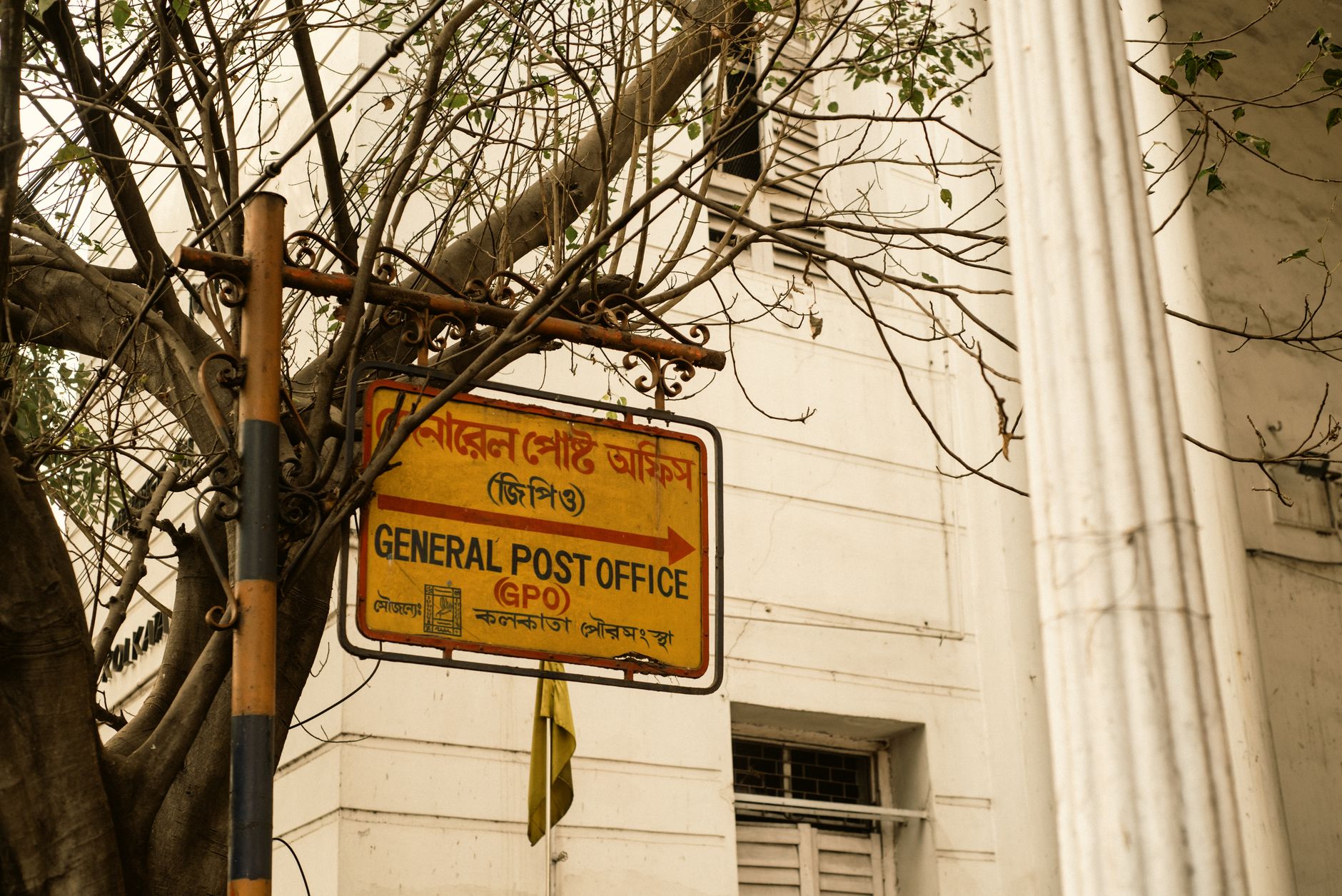
The General Post Office, completed in 1868, occupies the site of the original Fort William, the trading post that grew into the city. The fort was replaced long before the post office arrived, and the present building is a domed, colonnaded block with a wide flight of steps. It is still a working post office, so letters and parcels move through the hall while visitors photograph the staircase. Keep voices low and stay clear of the counters.
From the GPO steps, the square opens out with Lal Dighi in front and the High Court to one side. This is the classic view of the old capital, and it works best early, before the light hardens and the traffic builds. Check the clock on the facade, then cross carefully: the roads here carry fast traffic and the crossings are not generous. Pedestrian subways and signal crossings are the safer options.
Which buildings line the east side?
The Calcutta High Court stands on the east side of the square in a Gothic pile of pointed arches, traceried windows and a tall central tower. It is a working court, which is why the walk stays in the forecourt and on the pavement. Sessions mean security checks and restrictions on movement inside, so treat the building mainly as a facade to read from outside. Look at the seated figures and carved detail above the entrance arch.
The Currency Building, a short way off, is a nineteenth-century banking hall with iron columns and a high roof, conserved and opened to the public as an exhibition space. Opening days and any ticketed events change, so check with the Archaeological Survey of India before planning a look inside. Nearby, a cluster of commercial banks and offices keeps the streets busy through the working week. The exterior repays a pause even when the galleries are shut.
- Writers' Building: A 1777 office block, still in government use, with a red facade along the north side.
- General Post Office: An 1868 domed post office on the site of the first Fort William.
- Calcutta High Court: Gothic courts facing the tank, with a tower and a carved entrance.
- Currency Building: A conserved banking hall used for exhibitions; check opening days with the ASI.
- Metcalfe Hall: A colonnaded hall nearby, named after a nineteenth-century British administrator.
Where is Job Charnock buried?
St John's Church, consecrated in 1787, sits a little south of the square on Council House Street. In its churchyard is the mausoleum of Job Charnock, the East India Company official traditionally credited with founding Calcutta, though historians have argued about that attribution for decades. The churchyard also holds graves and memorials of other early residents, and the grounds are quiet compared with the roads outside. The mausoleum is small and often described as the oldest surviving British tomb in the city.
Inside, the church has memorial tablets, a painted ceiling and box pews, and an atmosphere that rewards a slow look. Opening hours vary and services take priority, so check the church's own notice or ask at the gate before planning a visit indoors. From here it is a short walk back to the square or on to Esplanade. The gate on the street is easy to miss, so look for the churchyard wall and the trees.
Can you go inside Raj Bhavan?
Raj Bhavan, the residence of the Governor of West Bengal, stands at the western edge of the circuit behind gates and lawns. The building began as Government House in the early nineteenth century and is one of the largest official residences in the country. The walk treats it as an exterior: the gates, the drive and the proportions of the facade seen from the road. Access to the state rooms is by prior arrangement only, and rules change.
Metcalfe Hall, nearer the river, is a colonnaded building with a rounded portico, named after a nineteenth-century administrator and long used as a library. It is a protected monument, and public access depends on conservation work and the use of the building at the time. From this corner the walk can drop down towards Strand Road and the ghats. Allow ten minutes for the detour and check the gates before walking in.
When is the best time for the walk?
Sunday morning is the best window. Government offices, courts and banks are shut, the pavements are clear, and the light falls on the facades before the heat builds. Aim to start not long after sunrise in March to May, and later, around eight or nine, in the cool months. Winter mornings can be hazy, and the air quality is often poor. Carry water and a hat from March onwards, and an umbrella in June to September.
Weekdays are possible but slower: traffic, security queues and office crowds make the loop take longer, and some stretches of pavement are blocked by parked cars. The monsoon, roughly June to September, brings waterlogging after heavy downpours, so plan around the rain rather than through it. October rain tails off and November is dry and comfortable. Festival days and public holidays change the picture entirely, with crowds and road closures.
- Sunday morning: Offices shut, light good, pavements quiet; the most reliable window for the loop.
- Winter months: December and January are the coolest; February is pleasant for walking.
- Summer: April and May are hot and humid; start early and carry water.
- Monsoon: June to September brings waterlogging; check the India Meteorological Department forecast.
How do you reach and walk it?
The walk starts easily from Esplanade or the BBD Bagh area, and the metro puts you within a few minutes of the tank, with Esplanade and Central the nearest stops on the north-south line. Buses and taxis serve the streets around. If a yellow taxi is used, insist on the meter, and expect slow movement through the office district on working days. Check Metro Railway Kolkata for current services. The ground is flat throughout, with kerbs and flagstones to watch.
Photography near government buildings may be restricted, and guards can ask you to stop. Ask before pointing a lens at a gate, a court entrance or a police post. Carry identification, keep bags where they can be seen, and expect bag checks at some entrances. Combine the loop with the Indian Museum or a walk to Howrah Bridge if there is time left in the day. Restaurants and cafes for a break are a short ride away in the Park Street area.
- Nearest metro: Esplanade and Central on the north-south line are both a short walk from Lal Dighi.
- Photography: Rules near courts and government offices vary; ask a guard before shooting.
- Footwear: Flat shoes for flagstones and kerbs; the route is level throughout.
- Combining: Pair the loop with the Indian Museum or the river ghats for a fuller morning.
Hotels in Esplanade & BBD Bagh
For BBD Bagh heritage walk, the nearest hotel area is Esplanade & BBD Bagh, with 35 stays in the IMPT hotel database. Listed 5-star first, then 4-star, then by guest score; live prices open in the IMPT app.
5★ 5★
 4★
 4★
 3★
 3★
FAQ
How long does the BBD Bagh heritage walk take?
Most people cover the loop around Lal Dighi in one to two hours at an easy pace, including pauses to look at Writers' Building, the GPO and the High Court. Add time if you stop at St John's Church or walk down to Metcalfe Hall. A half-morning is realistic.
When is the best day for a BBD Bagh heritage walk?
Sunday morning suits the BBD Bagh heritage walk best: government offices, courts and banks are shut, pavements are clearer and photography is easier without crowds. Weekdays work but run slower because of traffic and security queues. Winter months are the most comfortable for walking, and summer afternoons are best avoided.
Does the BBD Bagh heritage walk cost anything?
The BBD Bagh heritage walk follows public streets and is free to walk. Some buildings on the route, such as the Currency Building, may be ticketed or open only on certain days, and anything beyond the exterior of the High Court or Raj Bhavan needs permission. Check with the Archaeological Survey of India and the institution concerned.
Which buildings can you enter on the BBD Bagh heritage walk?
St John's Church is usually the easiest to step into when services are not running, and the Currency Building opens as an exhibition space on days set by the Archaeological Survey of India. The GPO hall is a working post office open in office hours. Writers' Building, the High Court and Raj Bhavan are working institutions, so the walk stays outside.
Can you photograph on the BBD Bagh heritage walk?
Photography on the BBD Bagh heritage walk is generally fine on the streets and around Lal Dighi, but rules tighten near courts, police posts and government gates, where guards may ask you to stop. Ask first, keep the camera low, and do not photograph security arrangements. Courts in session are not for photographing.
How do you reach the BBD Bagh heritage walk by metro?
Esplanade and Central on the north-south metro line are the closest stops to Lal Dighi, both a short walk from the tank. The East-West line also reaches Esplanade, which makes the BBD Bagh heritage walk easy to reach from Salt Lake or Howrah Maidan. Check Metro Railway Kolkata for current services and hours.
What is Lal Dighi and why does the walk circle it?
Lal Dighi is the tank at the centre of Benoy-Badal-Dinesh Bagh, the square once called Dalhousie Square. The main buildings of the old capital face it or stand a street away, so a loop of the water brings each facade into view in turn. It also works as a landmark for keeping direction.
Is the BBD Bagh heritage walk suitable for children and older walkers?
The BBD Bagh heritage walk is level and short, so it suits most ages and abilities, with kerbs, flagstones and road crossings the main things to watch. There are few benches and little shade around the tank at midday. Sunday mornings are calmest for children, when traffic is lighter and pavements are free.
What else is near the BBD Bagh heritage walk?
The Indian Museum, New Market, Park Street and the Howrah Bridge approach are all within a short ride of Lal Dighi, and the river ghats along Strand Road are a short walk away. Many visitors pair the BBD Bagh heritage walk with a North Kolkata trip later the same day, or with the flower market at Mallick Ghat.
Read next
Sources: West Bengal Tourism, Kolkata Municipal Corporation, Archaeological Survey of India, Metro Railway Kolkata.
Editorial review: 3 November 2026. Opening days, fares and festival dates change; check before you go.