 5★
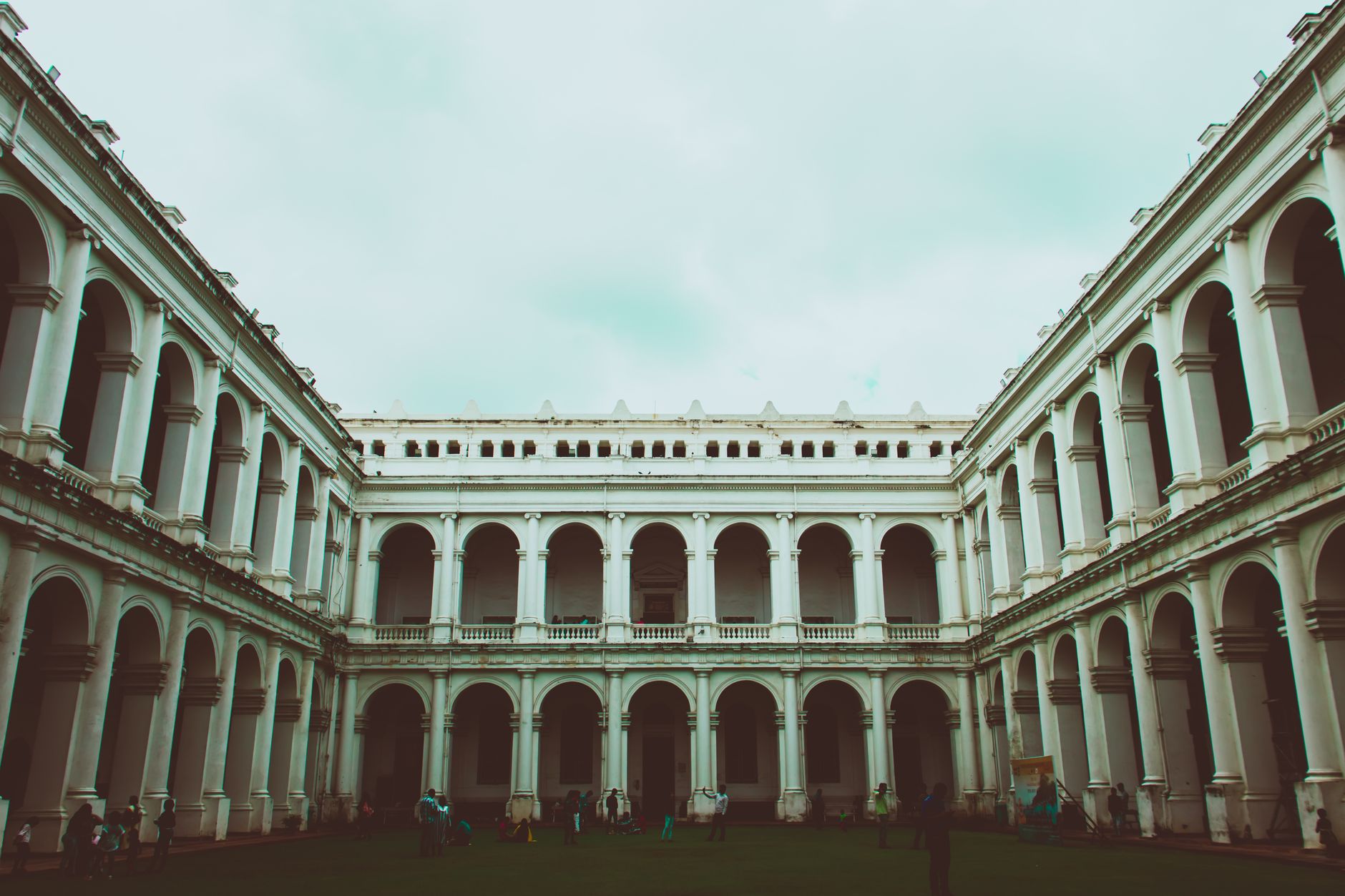
The Indian Museum is India's oldest museum, founded in 1814 and run today from a long colonial building on Chowringhee, Jawaharlal Nehru Road. Its galleries cover archaeology, sculpture, art and natural history, with the Bharhut stupa railings, Gandhara Buddhist sculpture, an Egyptian mummy and a replica of the Ashokan lion capital. Allow about two hours. It closes on Mondays, so check the official website before travelling.
Why visit the Indian Museum?
Founded in 1814 by the Asiatic Society, the Indian Museum is the oldest museum in India and among the largest in the country. The society had been collecting manuscripts, coins, inscriptions and sculpture since 1784, and the museum grew from that cabinet into a national collection. The scale surprises people who expect one hall of glass cases. It spans art, archaeology, anthropology, geology, zoology and botany, and a single circuit can take in most of it.
The building itself is part of the visit. The museum sits in a long, colonnaded block on Chowringhee, now officially Jawaharlal Nehru Road, with a central entrance and a staircase that sets the tone for the galleries above. Rooms open off long corridors, so it helps to pick a direction and work through methodically rather than doubling back. Labels are in English and Bengali, and the captions explain the chronology.
How did the Indian Museum begin?
The Asiatic Society, founded in 1784 by Sir William Jones, gathered Oriental manuscripts, coins, inscriptions and sculpture from its earliest years. In 1814 that growing cabinet was formally constituted as a museum, which makes the Indian Museum the oldest in India and one of the earliest in Asia. It occupied the society's own rooms at first, then moved as the collection outgrew them, settling on Chowringhee in the nineteenth century. The society continues in the city as a learned body with its own library.
The museum is a government institution under the Ministry of Culture and also a research body, with curators, conservators and a reference library behind the public galleries. That double role explains the range: display cases sit alongside study collections of coins, textiles, pottery and zoological specimens. Not every room is open at once, because conservation work rotates through the building, so a second visit rarely repeats the first. Staff at the entrance can say which sections are closed.
Which exhibits should you look for?
The Indian Museum is too large to absorb in one pass, so most visitors pick a handful of rooms and do them properly. The sculpture galleries carry the strongest material: the Bharhut railings, the Gandhara figures and a long run of stone deities from Bengal and central India. The Egyptian mummy and the natural history halls pull in families and school groups, and there is a coin collection and a textile gallery for anyone with a narrower interest.
Signage at the entrance maps the galleries, and it is worth reading before setting off, because the building is a long rectangle and some rooms sit at the far end. Temporary exhibitions and conservation closures can remove a gallery from the route, so treat any list of highlights as a starting point. Ask at the desk if a particular object is the reason for your visit, and the staff will point you towards it.
- Bharhut railings: Sandstone railing and gateway pieces from a Buddhist stupa in central India, carved in the second century BCE.
- Gandhara sculpture: Buddhist figures in grey schist from the north-west, with drapery and faces that echo Greek and Roman work.
- Egyptian mummy: A mummy with its coffin, displayed among the antiquities and an unexpected find in an Indian museum.
- Lion capital replica: A replica of the Ashokan lion capital at Sarnath, the sculpture adopted as the national emblem.
- Natural history: Mounted mammals, birds and reptiles plus skeletons, the section that holds the attention of younger visitors.
Why the Bharhut and Gandhara pieces matter
The Bharhut railings come from a stupa in central India and date to the second century BCE, which places them among the earliest carved stone narratives in the country. The panels show Jataka stories, yakshas and yakshis, and decorative motifs that were already old when the museum acquired them in the nineteenth century. Much of the carved railing is here, mounted so the individual medallions can be read at close range. The stone is sandstone, and the relief is deep enough to follow without a guide.
The Gandhara sculpture comes from the north-west, in what is now Pakistan and Afghanistan, where Buddhist workshops worked in grey schist under Kushan rule in the early centuries CE. The drapery, hairstyles and profile faces carry visible Greek and Roman echoes, the result of a region where trade routes met. Seen together with the flatter, more Indian carving of Bharhut, the two collections make a compact lesson in how Buddhist art travelled and changed. Labels note the site and the approximate date.
When is the Indian Museum open?
The Indian Museum closes on Mondays and on a small number of public holidays, and its daily hours shift with the season. Check the museum's official website or telephone before setting out, particularly around Durga Puja and Kali Puja, when closures are common and timings can change at short notice. Entry is ticketed, and the rates are posted at the counter. School groups and researchers should make arrangements with the museum in advance.
Weekday mornings are the quietest stretch, and school parties tend to arrive later in the day. The gate and ticket counter sit at the front of the building on Chowringhee, and there is a security check, so allow a few extra minutes. Bags pass through a scanner and large items may need to be left at the cloakroom. Seating near the entrance gives a place to rest between sections.
How do you reach the Indian Museum?
The museum stands on Chowringhee, now Jawaharlal Nehru Road, between Park Street and Esplanade. Both Park Street and Esplanade stations on the north-south Blue Line are close, and either gives a walk of a few minutes along a wide pavement. Anyone staying around Park Street can treat the museum as the first stop of the day, with New Market, the Maidan and the river beyond it. Crossing the road needs care, since traffic runs fast and the lights are short.
Yellow taxis and app cabs drop passengers at the gate, though Chowringhee traffic is heavy for much of the day and one-way streets can lengthen a short hop. Buses run along the road and stop names are announced in Bengali and English. The Metro is usually quicker across the centre; check Metro Railway Kolkata for current hours and for news of line extensions before relying on a route. Allow extra time in the evening rush.
What else is within walking distance?
The Indian Museum sits in the middle of the Chowringhee cluster, so it pairs well with other stops. The Victoria Memorial and its grounds lie further south along the same road, across the Maidan. New Market, opened in 1874, is a short walk away for produce, clothes and household goods, and the food stalls around it are part of the reason to come. Park Street adds cafés and restaurants within easy reach, and a single morning can cover the museum and one of these.
North of the museum, Chowringhee turns into a run of offices, colleges and bookshops that leads towards College Street and the Indian Coffee House at Albert Hall. The Maidan on the east side is open ground, with Eden Gardens cricket ground at its edge and the Hooghly at Prinsep Ghat beyond. All of this is reachable on foot or with one short taxi ride, which makes the area easy to plan. The riverside is best in late afternoon.
- Victoria Memorial: White Makrana marble memorial with a museum and 64-acre grounds, a short ride south along Chowringhee.
- New Market: Hogg Market, opened in 1874, for produce, clothes and household goods, with Nizam's nearby for kathi rolls.
- Park Street: Restaurants, cafés and the Christmas lights, with Flurys and Peter Cat among the long-standing names.
- Maidan and Prinsep Ghat: Open ground east of Chowringhee, Eden Gardens at its edge, and the Palladian memorial on the river beyond.
How should you plan a visit?
Two hours covers the sculpture galleries and a quick pass through natural history, which suits most travellers. Anyone with a research interest in coins, textiles or Buddhist art can spend considerably longer. Go early, carry water, and expect a security check at the door. The building is old and some staircases are steep, so ask about lift access if stairs are difficult. The labels reward slow reading, and the Bharhut panels repay a second look.
Pair the museum with one other sight rather than three, because Chowringhee traffic eats into any schedule. A workable half day runs the museum first, lunch on Park Street, then a walk on the Maidan or along the river at Prinsep Ghat. If a Monday is the only free day, keep the museum for later and use the Maidan, the riverfront and Park Street instead. Evenings are cooler and the light across the Maidan is better for photographs.
- Allow two hours: Enough for the sculpture galleries, the Egyptian mummy and a walk through the natural history rooms.
- Check the day: The museum shuts on Mondays, and holiday closures are common, so confirm on the official website.
- Carry water: The route involves long standing stretches; bottled water is easy to buy on Park Street beforehand.
- Ask about photography: Rules differ by gallery and are posted at the entrance; flash and tripods are commonly restricted.
Hotels in Park Street
For Indian Museum, the nearest hotel area is Park Street, with 241 stays in the IMPT hotel database. Listed 5-star first, then 4-star, then by guest score; live prices open in the IMPT app.
5★ 5★
 5★
 5★
 4★
 4★
FAQ
How long does a visit to the Indian Museum take?
Allow about two hours for the sculpture galleries and a pass through the natural history rooms. Add an hour if the coin, textile and painting collections matter to you. The building is long and some galleries sit far from the entrance, so a focused route saves time. Students of Buddhist art often stay most of a morning.
When is the Indian Museum closed?
It closes on Mondays and on a few public holidays, and timings can change around Durga Puja and Kali Puja. Check the museum's official website or telephone the day before you go, since conservation work can also close individual galleries without notice. Weekday mornings outside the holiday season are the safest bet.
Where is the Indian Museum in Kolkata?
The Indian Museum stands on Chowringhee, now called Jawaharlal Nehru Road, in the centre of Kolkata between Park Street and Esplanade. The entrance faces the road, and the Maidan lies to the east. It is within walking distance of both metro stations, and yellow taxis and app cabs drop passengers at the gate.
Which metro station is nearest the Indian Museum?
Park Street and Esplanade stations on the north-south Blue Line are both close, and the walk from either is straightforward. Park Street suits anyone staying in that area, while Esplanade is useful from BBD Bagh, Howrah or the Green Line. Check Metro Railway Kolkata for current hours and station details.
What are the best-known exhibits in the Indian Museum?
The Bharhut stupa railings from the second century BCE, the Gandhara Buddhist sculpture, an Egyptian mummy and a replica of the Ashokan lion capital are the pieces most visitors look for. The natural history galleries, with mounted animals and skeletons, draw families. Coins, textiles, paintings and stone sculpture from Bengal fill out the rest of the collection.
Is the Indian Museum suitable for children?
Yes, mainly because of the natural history galleries, where mounted animals, birds and skeletons hold attention in a way that rows of stone sculpture do not. Older children studying Indian history will recognise the Ashokan lion capital and the Buddhist carvings from school books. Two hours is about right, since longer tends to tire younger visitors.
Do you need to book Indian Museum tickets in advance?
Advance booking is not usually necessary for individual visitors, and tickets are sold at the counter on the day. Groups and school parties should contact the museum in advance. Entry is ticketed, with rates posted at the counter, and payment is straightforward. Check the official website for any change to the system before you travel.
What is the Bharhut collection at the Indian Museum?
It is a group of carved sandstone railings and gateway pieces from a Buddhist stupa at Bharhut in central India, made in the second century BCE. The medallions show Jataka stories and yaksha and yakshi figures. Most of the surviving carving is in the Indian Museum, which makes the gallery a primary stop for early Indian sculpture.
Can you take photographs inside the Indian Museum?
Photography rules differ from gallery to gallery and are posted at the entrance. Flash, tripods and video are commonly restricted, and some display cases are off limits entirely. Ask staff at the desk if you are unsure, and keep cameras away where signs forbid them. Rules can tighten around special exhibitions.
Read next
Sources: Indian Museum, Ministry of Culture, Metro Railway Kolkata, West Bengal Tourism.
Editorial review: 3 November 2026. Opening days, fares and festival dates change; check before you go.