 3★
Howrah Bridge, or Rabindra Setu, opened in 1943 and spans the Hooghly between Howrah station and Burrabazar. Under its Kolkata landing, the Mallick Ghat flower market sells marigold garlands and loose blooms from before dawn. The two make one early morning walk of one to two hours. Go at sunrise, wear shoes with grip and keep clear of working traders.
What is Howrah Bridge?
Howrah Bridge, renamed Rabindra Setu in 1965, carries road traffic across the Hooghly between Howrah station on the west bank and the Burrabazar wholesale district on the Kolkata side. The cantilever structure opened in 1943 and ranks among the busiest bridges in the world by traffic. Its steelwork is riveted rather than bolted, a detail guides repeat on every crossing, and the deck gives a moving view of the river, the ghats and the boats below.
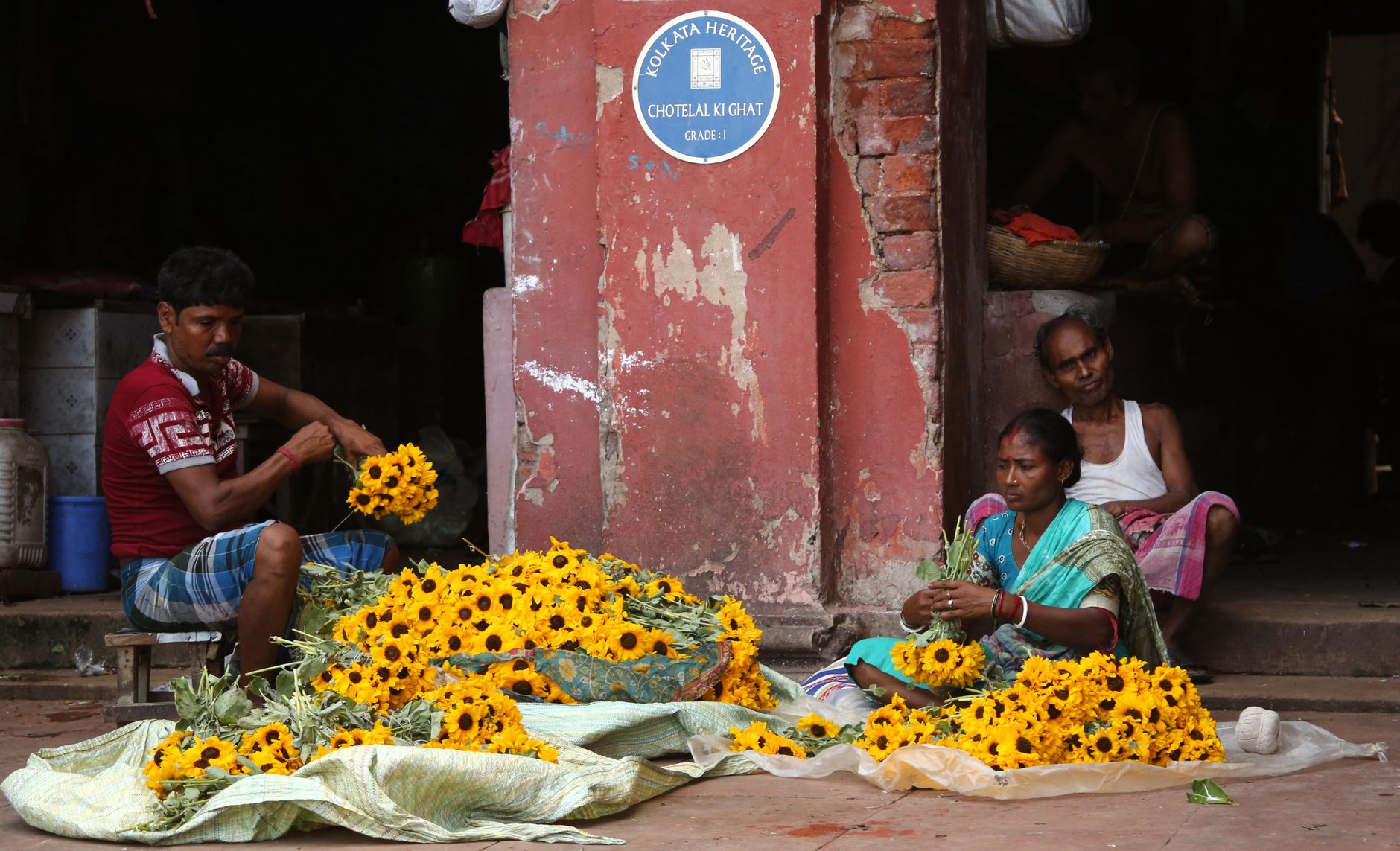
Mallick Ghat, the flower market tucked under the Kolkata landing of the bridge, is both a wholesale depot and a retail market for garlands and loose blooms. Marigold is the staple, sold in heaps and in strung garlands, with other flowers following the season and the festival calendar. The two sights sit a few minutes apart on foot, so a single early morning covers both without a change of plan. The market is free to walk through.
When should you visit?
Sunrise drives the timing. The flower market works hardest in the dark hour before first light and the hour after it, when porters unload, stringers thread garlands and buyers move between the stalls. The bridge is also at its quietest then, with far fewer vehicles and a cooler deck. By mid-morning the market has thinned and the carriageway is loud, so the same walk feels like a different place. Rain changes the light but not the routine of the market.
October to March is the comfortable window, with cool mornings in December and January and dry air in November and February. April and May bring heat and humidity, so an early start matters more. The monsoon, roughly June to September, can leave the riverside and market lanes wet and slippery, and the heaviest rain arrives in July. Marigold demand rises around Durga Puja and Kali Puja; lunar dates move, so check the current year's dates.
How do you reach the bridge?
The bridge has two ends and two approaches. On the west bank, Howrah station and the bus stands around it put the crossing within a few minutes of the platforms, which suits anyone arriving by train. On the east bank, the structure lands into Burrabazar, the old wholesale quarter, with BBD Bagh a short ride south and the Esplanade hotels beyond it. The side to start from depends on where the day begins.
Metro is the simplest approach for many. Howrah Maidan on the Green Line sits on the west bank, and the Blue Line stations at Central and M.G. Road serve the Kolkata end. Yellow taxis and app cabs are easy to find on both sides. River ferries run between Howrah, Babughat, Shobhabazar, Bagbazar, Dakshineswar and Belur, and a crossing by boat puts the bridge in view from the water. Check current schedules at the ghat before setting out.
- By metro: Howrah Maidan on the Green Line and Central or M.G. Road on the Blue Line are the closest stations; check Metro Railway Kolkata.
- By train: Howrah station is on the west bank, a few minutes from the bridge approach on foot.
- By ferry: Boats from Howrah, Babughat, Shobhabazar, Bagbazar, Dakshineswar and Belur give a river view of the bridge.
- By taxi: Yellow taxis and app cabs serve both ends; ask for the Howrah station side or Burrabazar.
What happens at Mallick Ghat?
Mallick Ghat is a working market rather than a display. Stalls and open floors hold heaps of marigold, jasmine, hibiscus and seasonal flowers, some sold loose for worship and some strung into garlands of different lengths. Workers sit in rows threading blooms, porters carry bundles on their heads, and buyers move through narrow lanes that stay damp underfoot. The busiest hours are before and just after sunrise. Photographs are welcome in principle, but ask before pointing a lens at anyone's face.
Dress for wet ground and wear shoes with grip, because the lanes are washed down and the floors stay slick. Keep to the edges when a load is moving and avoid blocking a working stall to frame a picture. A short greeting in Bengali helps, and a purchase is the easiest way to spend a few minutes at a stall. Entry is free and there is nothing to pay to walk through.
Can you walk across the bridge?
Pedestrians cross on footpaths along the deck, and the crossing is open at most hours, though traffic arrangements can change and the police may close a section during works or events. The walk is exposed, with noise, fumes and vibration from the traffic beside the rail. Stop only where there is space clear of the flow. Photography from the bridge itself may be restricted, so read the signs at the approaches.
The better plan is usually to walk one way and return by ferry or metro, which gives a second view of the bridge from the water or the bank. Early morning is the only time the deck feels calm enough to look around rather than watch the next vehicle. Allow time at each end rather than treating the crossing as a quick errand. A morning crossing from Howrah towards Kolkata puts the market at the finish.
- Start before dawn: Reach the Howrah end in the dark hour so the crossing is quiet and the market is at work.
- Keep to the footpath: Stay on the pedestrian path and away from the kerb where the traffic runs.
- Check the signs: Photography from the bridge may be restricted, so follow posted notices and police instructions.
- Walk one way: Cross on foot and return by ferry or metro rather than repeating the walk.
- Allow for noise: The deck is loud and exposed, so plan a short stop rather than a long wait.
What can you see from the bridge?
From the deck the Hooghly opens out in both directions, with cargo barges, country boats and the ghats of the old city along the banks. Downstream, Vidyasagar Setu, the cable-stayed bridge opened in 1992, crosses the river under a fan of cables. Below the Kolkata landing, the flower market appears as a patch of orange and yellow. On the Howrah side, the station roofs and the suburban lines spread out. The river is tidal at this point, roughly 150 km from the Bay of Bengal.
Burrabazar's lanes behind the bridge carry wholesale trade in cloth, spices, paper and sundries, and they are worth an hour if the crowds do not overwhelm. Further south, BBD Bagh holds the Writers' Building, the GPO and the Calcutta High Court around Lal Dighi. North Kolkata's Kumartuli potters' quarter is a short ride away and works hardest from July to September, when Durga idols are being made. Each is within a short ride of the bridge.
How long should you allow?
Allow one to two hours for the bridge and the flower market together, and more if the market is at full work or the walk is slow. Add time for a ferry crossing or a look around Burrabazar. Early morning is the practical slot: the market is active, the light is low and the bridge is quieter. An afternoon visit gives the bridge but a much reduced market. Most of the time is spent standing still rather than walking.
The route fits easily into a longer day. It sits between Howrah station and BBD Bagh, so it pairs with a heritage walk around Lal Dighi, or with the New Market and Park Street area further south. Ferries from the Howrah ghats reach Babughat and the northern ghats, which opens up Dakshineswar and Belur Math on the same river. Combine two of these and the morning is full. A return at dusk shows the bridge lit and the market closed.
What should you know before going?
Nothing about the visit is formal. There are no tickets for the bridge or the market, and no fixed opening time for either, though the market's working rhythm is early. Expect crowds, wet floors, loud traffic and smoke from the tea stalls. Keep valuables close and a bag zipped. The one firm rule is to stay out of the way of people working. Carry drinking water; the air near the carriageway is thick with exhaust.
Sunrise light is low, so a phone camera struggles under the market's tarpaulins and the bridge's shadow. A wide view from the ghat steps works better than a close frame of a single stall. Weekends bring more casual visitors and more requests for photographs, which traders meet with mixed patience. Weekday mornings are calmer for both the market and the crossing. A large camera invites questions, so keep the kit simple.
- Footwear: Closed shoes with grip suit the wet, slippery lanes of the flower market.
- Camera: Ask before photographing traders, and check bridge signage for any photography restriction.
- Cash: Notes help with flowers, tea and ferry tickets; cards are not the norm at the stalls.
- Water: Carry drinking water, as the air near the carriageway is thick with exhaust.
- Timing: Aim for sunrise and finish before the commuter traffic fills the deck.
Hotels in Howrah
For Howrah Bridge & Mallick Ghat, the nearest hotel area is Howrah, with 20 stays in the IMPT hotel database. Listed 5-star first, then 4-star, then by guest score; live prices open in the IMPT app.
3★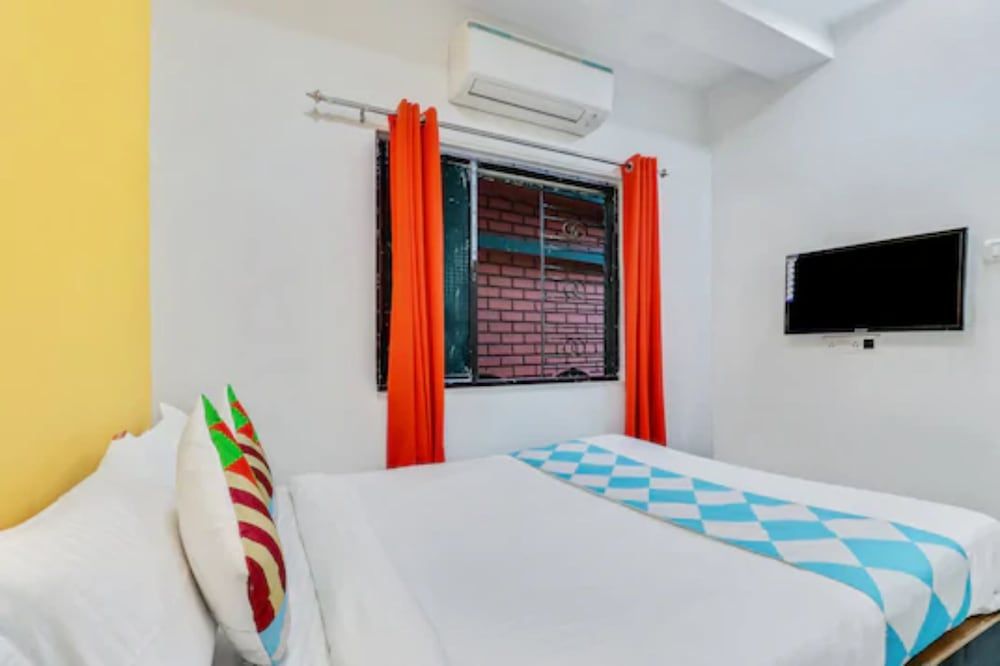 3★
 3★
 3★
 3★
 3★
FAQ
Where is Mallick Ghat flower market?
It sits directly under the Kolkata landing of Howrah Bridge, in the Burrabazar area on the east bank of the Hooghly. The market spreads along the ghat steps and the lanes beside the bridge approach. Howrah station is on the opposite bank, and BBD Bagh is a short ride south. The nearest metro stops on the Kolkata side are Central and M.G. Road; check Metro Railway Kolkata.
What time is Mallick Ghat flower market busiest?
The market works hardest in the dark hour before sunrise and the hour or two after first light, when porters unload and stringers thread garlands. By mid-morning the trade has thinned and much of the produce has gone. Arriving at first light gives the fullest view, and a weekday is calmer than a weekend. The market has no formal opening time.
Can you take photographs on Howrah Bridge?
Photography from the bridge deck may be restricted, and signs at the approaches set out what is allowed. Read them before raising a camera and follow any instruction from the police. On the bridge, keep moving and do not stop in the traffic flow. In the flower market below, ask before photographing traders at work, and expect a mixed response.
Is Howrah Bridge safe to walk early in the morning?
The bridge is a working road and the footpath is exposed to noise and fumes. Early morning is the calmest time, and the route is used by commuters and market workers from before dawn. Keep valuables out of sight, watch the kerb and stay off the carriageway. Traffic arrangements can change, so check current advice from Kolkata Police before a dawn visit.
How do you reach Howrah Bridge by metro?
On the Kolkata side, Central and M.G. Road on the Blue Line are the closest stations to the Burrabazar landing. On the west bank, Howrah Maidan on the Green Line serves the Howrah station end. Both lines are expanding and station details change, so check Metro Railway Kolkata for current services, exits and first trains before relying on a metro for a sunrise start.
How long does it take to walk across Howrah Bridge?
The crossing takes as long as the crowd and the pace of the walk allow; there is no fixed duration and much of the time goes on standing still. Allow one to two hours for the bridge and Mallick Ghat together, and add time for a ferry or a look around Burrabazar. A dawn start fits the whole route into a morning.
Can you combine Howrah Bridge with a Hooghly ferry?
Yes. Ferries run between Howrah, Babughat, Shobhabazar, Bagbazar, Dakshineswar and Belur, and the ghats sit close to both ends of the bridge. A short crossing gives a different view of the cantilever span from the water. Schedules shift with the tide and season, so check at the ghat or with West Bengal Tourism before planning a crossing.
What is sold at Mallick Ghat flower market?
Marigold dominates, sold loose and strung into garlands of different lengths, along with jasmine, hibiscus and other flowers that follow the season and the festival calendar. Some stalls supply worshippers at the ghat, others supply shops and event decorators across the city. The trade is wholesale as well as retail, so quantities are large and the lanes stay busy with loads.
Is Howrah Bridge the same as Rabindra Setu?
Yes. The cantilever bridge over the Hooghly opened in 1943 under the name Howrah Bridge and was renamed Rabindra Setu in 1965. Both names are in use, and signs, maps and taxi drivers may use either. The structure is unchanged: riveted steel, a road deck and footpaths on both sides, linking Howrah station with the Burrabazar district of Kolkata.
Read next
Sources: West Bengal Tourism, Kolkata Police, Kolkata Municipal Corporation, Metro Railway Kolkata.
Editorial review: 3 November 2026. Opening days, fares and festival dates change; check before you go.