
 4★
North Kolkata is the city's older quarter, covering Shyambazar, Shobhabazar, Bagbazar, Jorasanko and Kumartuli. It holds the Marble Palace, Jorasanko Thakurbari, the Shobhabazar Rajbari and the riverside ghats. Hotels are few, so most visitors stay central and arrive by metro at Shyambazar or Sovabazar Sutanuti. It is best for heritage walks and for Durga Puja, usually in late September or October.
Why visit North Kolkata?
North Kolkata is the older, denser half of the city, spread across Shyambazar, Shobhabazar, Bagbazar, Jorasanko and the potters' quarter of Kumartuli. Its streets hold grand nineteenth-century townhouses, family temples, printing presses and workshops, with the Hooghly and its ghats along the western edge. Landmarks such as the Marble Palace and Jorasanko Thakurbari sit within walking distance of each other. The lanes are narrow and often congested, but the architecture rewards slow travel on foot.
The area suits travellers who want to see the old city rather than sleep in it. Places to stay are few, and most visitors base themselves around Park Street or Esplanade and travel north for a morning or an afternoon. Coming early gives quieter lanes, working ghats and open workshops. Evenings are lively during Durga Puja and quiet at other times of year, when the district returns to family life and small trade.
How do you get to North Kolkata?
The Blue Line of the metro, India's first, runs north to south through the district. Shyambazar and Sovabazar Sutanuti are the useful stations for the oldest streets, with Shyambazar closest to the crossings that lead towards Bagbazar. The district begins roughly 4.9 km north of Park Street, a short journey on the same line. Check Metro Railway Kolkata for current hours, stations and any service changes before setting out.
River ferries call at Bagbazar and Shobhabazar ghats, connecting with Howrah, Babughat and Belur; services depend on the weather and are worth confirming on the day. Yellow taxis and app cabs reach the district, though the last stretch through Shyambazar can be slow at any hour. Buses and autos cover the main roads. Once inside the lanes, walking is the practical way to move between sights.
What is a North Kolkata heritage walk?
A walk through North Kolkata works best as a single line from Shyambazar south towards Sovabazar, with detours into the lanes on either side. Grand houses, small temples, sweet shops and presses sit side by side, and much of the interest is in the street itself rather than in any one entrance. Start early, carry water, and expect to stop often for gateways, shrines and signboards.
Some buildings are private homes and open only for a family puja or by arrangement, so a walk is largely about exteriors, courtyards glimpsed through gateways, and the working life of the lanes. Comfortable shoes matter on uneven paving. After heavy rain the older lanes hold water, so check the forecast and travel light. Local guides who know the area can be arranged through official tourism offices.
- Shobhabazar Rajbari: A large family house with a courtyard and thakurdalan, the setting for a well-known Durga Puja each year.
- Bagbazar ghats: Steps on the Hooghly used for bathing, ferries and evening gatherings, with views across to Howrah.
- Kumartuli: The potters' quarter where Durga idols are built from bamboo, straw, clay and river silt before the festival.
- Jorasanko Thakurbari: Tagore's family home, where he was born in 1861, now the Rabindra Bharati Museum.
- Marble Palace: An 1835 private residence entered on a free permit arranged in advance, with conditions that change.
Rajbaris and the Marble Palace
Several of the great merchant and landowning families built large courtyard houses in the north, known as rajbaris. The Shobhabazar Rajbari is the best known, with a thakurdalan used for the family Durga Puja and a courtyard that fills with visitors in festival season. Around it stand other houses of the same period, some still lived in, some divided between heirs, some decaying. Most are not open to the public and are seen from the street.
The Marble Palace, built in 1835, is the exception: a private residence that visitors can enter on a free permit arranged ahead, under conditions that change. Check the current arrangements before travelling. Inside are marble floors, paintings and a collection assembled over generations. Etiquette is simple: ask before photographing, do not cross into rooms marked private, and dress as you would for any family home.
When is Kumartuli busiest?
Kumartuli is the potters' quarter near the river, where idols of Durga and other deities are built up from bamboo frames, straw and clay before being painted and dressed. Work runs through the year, but the workshops are busiest between July and September, in the weeks before Durga Puja. In that period the lanes fill with half-finished figures, drying clay and deliveries of straw, fabric and ornament.
At other times of year the quarter is quiet and a single figure can be watched from a doorway. Ask before entering a workshop, keep to the edge of the working floor, and do not touch wet clay. Photographs are often welcome but not always, so ask first. The lanes are narrow, uneven and frequently wet underfoot, and the workshops are places of work rather than display.
Why visit Jorasanko Thakurbari?
Jorasanko Thakurbari is the family house of the Tagores and the birthplace of Rabindranath Tagore in 1861. The building is now the Rabindra Bharati Museum, with rooms kept in period style, family portraits, manuscripts and galleries covering Tagore's writing and the wider Bengal Renaissance. It is the most important literary site in North Kolkata and one of the few grand houses in the district that is open to visitors.
Allow time for the museum rather than treating it as a quick stop, and check opening days with Rabindra Bharati University before you go, since they shift around holidays and festivals. The lanes around Jorasanko hold printing presses, small temples and old shops. The walk between here and the Marble Palace passes a good deal of everyday life, which is as much the point as the houses themselves.
Durga Puja in North Kolkata
North Kolkata is where the festival feels most domestic. Family pujas in the rajbaris, neighbourhood barowari committees and the workshops of Kumartuli all sit within a few streets of each other. Durga Puja usually falls in late September or October, and the dates move every year, so check the current year's dates. UNESCO added Kolkata's Durga Puja to its Intangible Cultural Heritage list in December 2021.
Expect crowds in the evenings and long walks between pandals. The lanes around Shobhabazar and Bagbazar are best covered on foot, with Shyambazar or Sovabazar Sutanuti as the way in and out. Keep valuables close, agree a meeting point if you split up, and expect one-way pedestrian flows near the larger pandals. Mornings are calmer, and the lanes are easier to photograph before the crowds arrive.
- Shobhabazar Rajbari: The family puja in the courtyard draws visitors for its setting and its traditional image of the goddess.
- Bagbazar: Riverside lanes with several neighbourhood pandals and easy access to the ghats.
- Kumartuli: See the idols in progress through the summer and the finished work just before the festival.
- Barowari pandals: Community pandals in back streets, smaller than the themed shows elsewhere but often older.
Where to eat in North Kolkata
Food in the north is mostly street food and small shops rather than restaurants. Expect telebhaja fried at stalls, phuchka in the evenings, kathi rolls, and sweet shops selling mishti doi, sandesh and, in winter, sweets made with nolen gur. Tea comes in bhanr, the clay cups, and is drunk standing. Cash is useful for stalls and small shops, and the busiest places are usually the ones turning food over quickly.
For a sit-down break, Indian Coffee House on College Street, a short ride south of the district, is the nearest of the city's old cafés and a natural stop on a walk that continues towards Esplanade. Elsewhere eating is informal: order, eat and move on. Vegetarian food is easy to find, and sweet shops double as snack counters through the day.
- Tea stalls: Clay cups of milky tea, drunk standing at the counter through the working day.
- Sweet shops: Mishti doi, sandesh and nolen gur sweets in winter, usually sold by weight.
- Telebhaja stalls: Fried snacks in the late afternoon, best eaten hot where they are made.
- Indian Coffee House: The College Street branch of the old coffee house, a short ride south of the district.
Hotels in North Kolkata
13 stays in the IMPT hotel database are in or near North Kolkata. Listed 5-star first, then 4-star, then by guest score; live prices open in the IMPT app.
4★ 3★
OYO Flagship 19290 Bag Bazaar
North Kolkata, Kolkata · 3-starGuest score 3.9/5 · 281 reviewsSee live price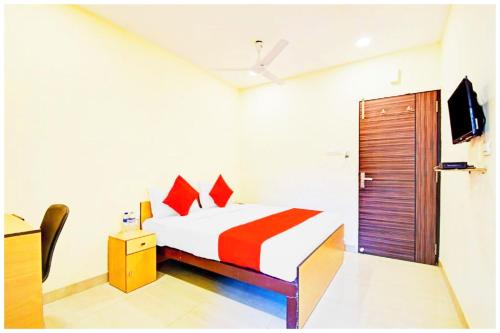 3★
Goroomgo Elite Inn Ultadanga Kolkata
North Kolkata, Kolkata · 3-starGuest score 2.2/5 · 6 reviewsSee live price 3★
 3★
 3★
FAQ
Is North Kolkata worth visiting?
Yes, for the architecture and the river. The district holds the Marble Palace, Jorasanko Thakurbari, the Shobhabazar Rajbari, Bagbazar ghats and the Kumartuli workshops, most of them within walking distance of the Shyambazar and Sovabazar Sutanuti metro stations. Give it a morning or a full day rather than an hour, and wear shoes you can walk in.
Which metro stations serve North Kolkata?
Shyambazar and Sovabazar Sutanuti on the Blue Line are the two useful stations. Shyambazar is closest to the crossings for Bagbazar and the main shopping stretch, while Sovabazar Sutanuti puts you near the older lanes and the ghats. Both lie on the north to south line through Esplanade and Park Street. Check Metro Railway Kolkata for current hours and stations.
How far is North Kolkata from Park Street?
The district begins roughly 4.9 km north of Park Street. The metro covers the distance directly on the Blue Line, with Shyambazar and Sovabazar Sutanuti as the relevant stops, and a taxi or app cab follows a similar line up through the centre. Road journeys take longer in the evening peak and longer again during Durga Puja.
Should you stay in North Kolkata or central Kolkata?
Central Kolkata has most of the hotels, restaurants and evening life, and most visitors base themselves there. North Kolkata has few places to stay but offers early mornings at the ghats and empty lanes before the shops open. Staying north suits travellers who want quiet and heritage on the doorstep; otherwise visit by metro and keep a base around Park Street or Esplanade.
When is the best time to walk around North Kolkata?
Winter, from November to February, gives the most comfortable walking weather, with cool mornings and dry days. From March the air becomes hot and humid, so walks are better started at first light. The monsoon, roughly June to September, brings waterlogging in the older lanes after downpours. Durga Puja is the liveliest season but also the most crowded.
Where can you see Durga Puja in North Kolkata?
The family puja at Shobhabazar Rajbari is the best known, and the lanes around Bagbazar and Shyambazar hold many neighbourhood barowari pandals. Kumartuli shows the idols being made in the weeks before. Puja falls in late September or October on dates that move each year, so check the current year's dates before planning, and expect crowds in the evenings.
How do you visit Kumartuli in North Kolkata?
Kumartuli sits near the river, a short walk or auto ride from Shyambazar or Sovabazar Sutanuti metro stations. The workshops are busiest from July to September, before Durga Puja, when the lanes fill with half-finished figures. Ask before entering a workshop, keep clear of wet clay, and check before photographing. Outside those months the quarter is quiet and easier to see.
Is the Marble Palace in North Kolkata open to visitors?
It is a private residence built in 1835, and entry is by a free permit that has to be arranged in advance, under conditions that change. Check the current arrangements before travelling. Rooms in use by the family are closed to visitors and photography may be restricted. Dress and behave as you would in any occupied house, and keep to the areas you are shown.
What is Jorasanko Thakurbari in North Kolkata?
It is the Tagore family house and the birthplace of Rabindranath Tagore in 1861, now the Rabindra Bharati Museum. Rooms are kept in period style, and displays cover Tagore's writing, the family and the Bengal Renaissance. It is one of the few grand North Kolkata houses open to visitors. Check opening days with Rabindra Bharati University, since they change around holidays.
Read next
Sources: West Bengal Tourism, Metro Railway Kolkata, Kolkata Municipal Corporation, UNESCO.
Editorial review: 3 November 2026. Opening days, fares and festival dates change; check before you go.
Photo credits: Mike Prince from Bangalore, India, CC BY 2.0, via Wikimedia Commons.