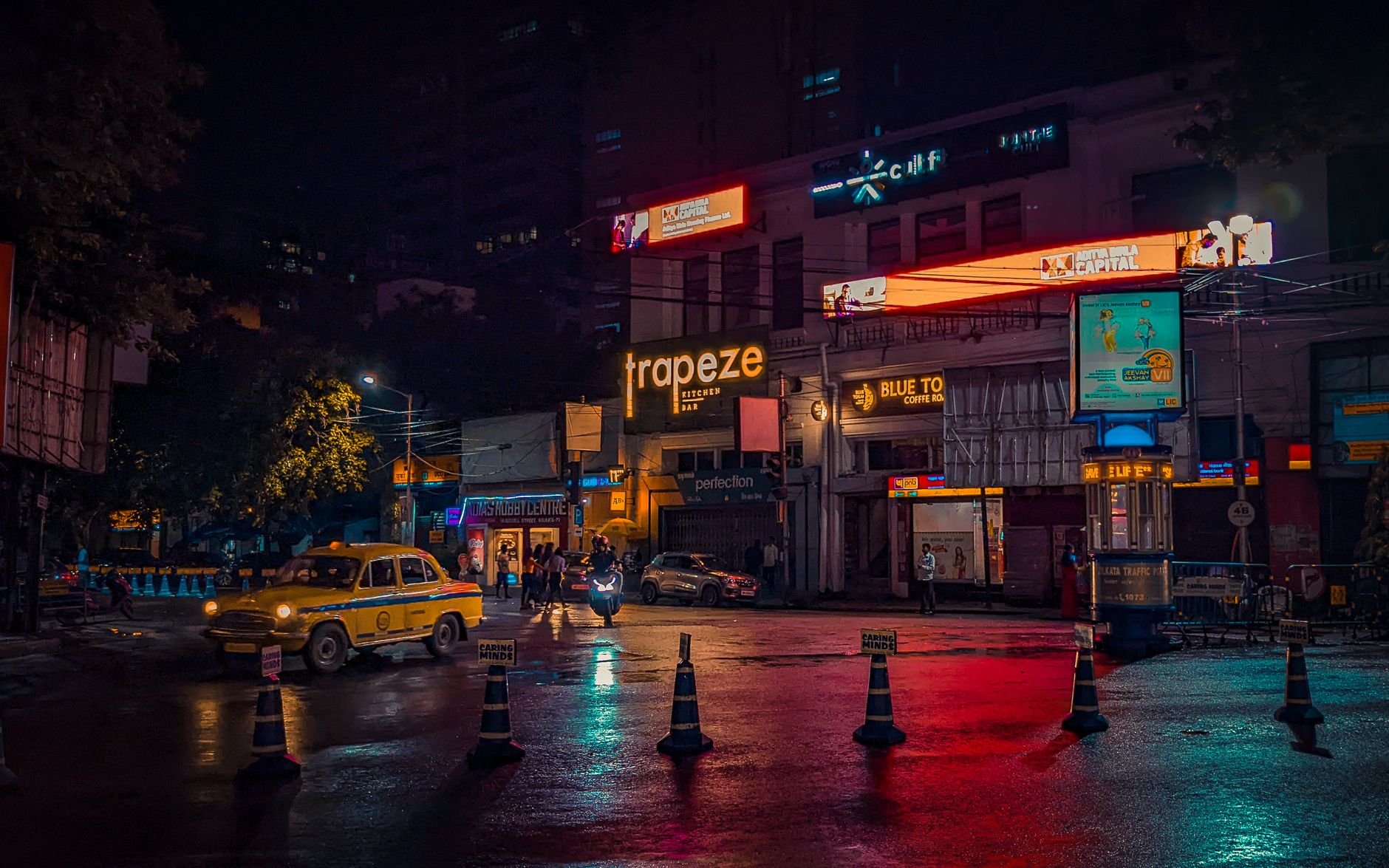
Kolkata is generally regarded as one of India's safer large cities, and most visitors travel without incident. The real risks are everyday ones: pickpockets in dense crowds, unmetered taxis, temple touts, traffic, summer heat and monsoon waterlogging. Take ordinary city precautions, use app cabs at night, keep bags zipped at New Market and Howrah, and note 112, the national emergency number, along with Kolkata Police helplines.
Is Kolkata safe overall?
Kolkata is generally regarded as one of India's safer large cities for visitors. Violent crime against tourists is uncommon, and the city's reputation for political noise is not the same thing as danger on the street. Most trips pass without incident. The risks that matter are ordinary urban ones: crowding, traffic, heat, monsoon waterlogging and the occasional opportunist thief. Solo travellers, families and older visitors all move around comfortably. Check Kolkata Police advisories before a major festival.
The city centre around Esplanade, Park Street, Ballygunge and Salt Lake stays busy late into the evening, which helps. Streets are rarely empty, shops stay open, and people are used to visitors asking directions. Even so, ordinary habits travel with you: zip the bag, keep the phone out of sight in dense crowds, and skip dim, deserted stretches after midnight. Nothing about Kolkata demands unusual precautions, only the ones you would take in any big city, plus a little more care during festivals.
Where do pickpockets operate?
The pinch points are predictable. New Market and the surrounding shopping streets, the approaches to Howrah station, the flower market under Howrah Bridge, the metro escalators at Esplanade and Park Street, and any dense festival crowd after dark. Pickpockets often work in pairs and rely on jostling, so a bag hanging open on the shoulder or a phone in a back pocket is the usual target. Keep valuables in a front pocket or a zipped cross-body bag worn in front.
During Durga Puja, from Shashthi to Dashami, very large numbers of people walk the streets of central and south Kolkata at night. The mood is family-friendly and heavily policed, but the crowds are dense enough for accidental losses and deliberate theft. Note the name of the pandal you are heading to, agree a meeting point in case you separate, and hold children's hands. Crowd-control arrangements change each year, so check Kolkata Police for the current routes and closures.
- New Market: Keep the bag zipped and the phone away in the aisles and the surrounding streets.
- Howrah station: The approaches and the taxi queue are crowded; watch bags in the crush.
- Festival crowds: Agree a meeting point before entering a Durga Puja crowd with a group.
- Metro escalators: Stand to one side and keep the bag in front on busy escalators and platforms.
Taxis, app cabs and night travel
Yellow Ambassador taxis are metered. Ask for the meter at the start of the journey and check that it is running; if a driver refuses, take another cab. App cabs are widely used and remove haggling, though pickup points outside stations and malls can be confusing. Late at night, prefer an app cab with a recorded trip, and avoid unmarked cars whose drivers offer a ride. Fares change; check the current fare rather than accepting a flat quote.
Kolkata keeps late hours by Indian standards. Kitchens serve until late, Park Street stays busy, and the metro runs into the evening, though last trains vary, so check Metro Railway Kolkata for current timings. After midnight the streets thin out quickly. Hand-pulled rickshaws still operate in parts of the old city, mostly for short hops; agree the destination before setting off. Walking alone in the small hours is not advisable anywhere in India, Kolkata included.
- Meter first: Ask for the meter at the start and check it is running before the car moves.
- App cabs at night: A recorded trip is easier to trace than a street hail after dark.
- Share the details: Send the number plate and route to someone if you are travelling late.
- Agree before riding: Settle the destination with auto-rickshaw and rickshaw drivers before setting off.
Is Kolkata safe for women travellers?
Many women travel in Kolkata alone and describe it as comfortable. Public behaviour is generally conservative: clothing that covers shoulders and knees draws less attention, especially at temples and in North Kolkata. Staring happens, as in most Indian cities. The metro has women-only coaches and ladies' seats in general compartments, and suburban trains have ladies' compartments, which makes daily commuting calmer. Stations are staffed and busy for most of the day.
Practical points worth knowing: use the ladies' coach where one runs, and look for the marked ladies' compartment on suburban platforms. Avoid empty carriages and isolated platforms late at night. Trust your instincts about a driver or a stranger who offers help, and take an app cab with tracking in the evening. If something feels wrong, 112 connects to police, fire and ambulance across India. Staff at your accommodation can advise on the simplest route back.
Touts at temples and landmarks
At Kalighat, Dakshineswar and Belur Math, and at the gates of Victoria Memorial and the Indian Museum, men will offer to act as guide, point you to a shorter queue or show you a shortcut. Some are genuinely helpful; many expect payment. Decline politely and walk to the official counter. Temples set their own rules on shoes, phones and photography, and priests may offer blessings in exchange for a donation. Nobody who approaches you unsolicited must be paid.
The same caution applies to anyone who says the place is closed today, that the queue is impossible, or that you should visit a particular shop first. Check opening days yourself: the Victoria Memorial museum closes on Mondays and some national holidays, and other sites keep their own weekly closures. Marble Palace is a private residence entered on a free permit, and the arrangements can change, so confirm before travelling. Buying at official counters avoids most arguments.
Street food and water safety
Street food is one of the pleasures of a Kolkata trip, and phuchka, kathi rolls, jhalmuri and telebhaja are eaten by residents daily. Choose stalls with a queue and fast turnover, watch the food being cooked in front of you, and eat it hot. Skip cut fruit and anything that has been standing. Many visitors eat widely without trouble; others react to unfamiliar oil and chilli rather than to hygiene. Carry oral rehydration salts and a simple stomach remedy.
Drink sealed bottled or properly filtered water, and be cautious about ice at small roadside stalls. Bhanr tea, served in a clay cup, is made with boiled water and is generally fine. Sit-down restaurants, including the old Park Street names, are straightforward. If your stomach is sensitive, introduce street food gradually over the first days rather than on the way to a long train. Serious illness is uncommon, and pharmacies are easy to find across the city.
Traffic, heat and monsoon flooding
Traffic is the most consistent hazard. Crossings are marked, but buses, taxis and two-wheelers do not always stop, so cross with a group, make eye contact with approaching drivers, and never assume a green signal means an empty road. Pavements are uneven and often blocked by tree roots, parked vehicles or building work. Heat from April to May, often above 35°C with high humidity, troubles visitors more than crime does: carry water, rest at midday and use the metro.
The monsoon, roughly June to September and heaviest in July, brings short intense downpours and localised waterlogging. A street can flood ankle-deep within an hour and drain just as fast; the metro keeps running when the roads seize up. Winter mornings can be hazy with poor air quality, which matters if you have breathing trouble. Check the India Meteorological Department forecast before long day trips, and carry a light rain jacket from June onwards.
Emergencies and everyday precautions
112 is the national emergency number for police, fire and ambulance. Kolkata Police publishes local helplines and traffic updates, and officers on duty at major junctions are used to giving directions. Large events, including Durga Puja and the International Kolkata Book Fair, bring temporary crowd controls and road closures, so follow police signage. Keep a phone image or photocopy of your passport and visa, and carry your address in Bengali script for taxi drivers.
The everyday list is short. Carry some cash for taxis, markets and street food, because cards and UPI are not accepted everywhere. Back up phone and card details somewhere separate. Tell someone where you are going if you leave the centre for a day trip. Buy tickets at official counters, take the metro after dark where it runs, and choose app cabs over lifts from strangers. Visitors who take these ordinary precautions usually find Kolkata calmer than expected.
- Emergency number: 112 covers police, fire and ambulance across India, including Kolkata.
- Passport copies: Keep an image of your passport and visa separate from the originals.
- Cash: Carry some for taxis, markets and street food; cards are not accepted everywhere.
- Travel insurance: Medical cover is worth arranging before arrival rather than after.
- Official counters: Buy tickets and permits at the counter rather than through anyone who approaches you.
FAQ
Is Kolkata safe for tourists travelling alone?
Broadly yes. Solo travellers move around Kolkata daily, using the metro, app cabs and busy streets without trouble. The city is livelier after dark than many Indian cities, which helps. Take the usual precautions: a zipped bag in crowds, app cabs at night, and no walks through empty stretches after midnight. Kolkata Police helplines and 112 are available if anything goes wrong.
Are yellow taxis in Kolkata safe at night?
Metered yellow taxis are a normal way to travel after dark, but ask for the meter and check it is running. Many visitors prefer app cabs at night because the trip is recorded and the driver's details are on the phone. Avoid unmarked cars and anyone offering a ride at a station exit. Check the current fare rather than agreeing a flat sum.
Is the Kolkata metro safe for women?
Yes. The metro has women-only coaches and ladies' seats in general compartments, and stations are staffed and busy for most of the day. Suburban trains have ladies' compartments marked on the platform. The metro is often the simplest option for women travelling alone in the evening. Check Metro Railway Kolkata for current hours and coach positions.
Can you drink tap water in Kolkata?
No. Drink sealed bottled water or water that has been properly filtered, and be wary of ice at small roadside stalls. Bhanr tea is made with boiled water and is generally fine. Restaurants and cafés serve safe water and ice. Carry a refillable bottle and ask at your accommodation where filtered water is available.
Is it safe to walk around Kolkata after dark?
Central areas such as Park Street, Esplanade and parts of Ballygunge stay busy well into the evening and are comfortable on foot. Streets thin out quickly after midnight. Walk with purpose, stay on lit roads, and take an app cab rather than cutting through quiet lanes or the Maidan at night. Ordinary city habits apply.
Are the Durga Puja crowds in Kolkata safe?
Largely yes. Durga Puja crowds are family groups, and the police manage routes and road closures each year. The risks are jostling, lost children and pickpockets rather than violence. Go with others, agree a meeting point, keep children's hands held and valuables zipped. Crowd arrangements change annually, so check Kolkata Police guidance and the current year's dates.
Is Kolkata safe to visit during the monsoon?
Yes, with planning. The monsoon, roughly June to September, brings heavy downpours and short-lived waterlogging, worst in July. The metro runs when roads flood. Carry a rain jacket, wear footwear that can get wet and allow extra time for crossings and airport runs. Check the India Meteorological Department forecast before day trips to the Sundarbans or Shantiniketan.
What is the emergency number in Kolkata?
112 is the national emergency number for police, fire and ambulance and works across India, including Kolkata. Kolkata Police also publishes local helplines for traffic and visitor assistance, and officers at major junctions can direct you. Save the number before you need it, and keep your accommodation address written down in Bengali for drivers.
Are touts a problem at Kalighat and Dakshineswar?
They can be. Men near the temple entrances offer guidance, blessings or a quicker route, sometimes expecting payment. Walk past politely and use the official counter or shoe deposit. Temples publish their own rules on photography and offerings. Nobody who approaches you unsolicited has to be paid, and a firm but friendly refusal is usually enough.
Read next
- Getting around Kolkata
- Yellow taxis and app cabs in Kolkata
- Kolkata in the monsoon: is it worth it?
- More from the Kolkata blog
Sources: Kolkata Police, Metro Railway Kolkata, India Meteorological Department, West Bengal Tourism.
Editorial review: 3 November 2026. Opening days, fares and festival dates change; check before you go.