The Sundarbans is reached from Kolkata by road to Godkhali, roughly three hours, then by boat into the creeks. Entry needs a permit from the West Bengal Forest Department, normally arranged through an operator. Allow two or three nights, travel between November and March, and expect watchtowers rather than tigers.
What the Sundarbans actually is
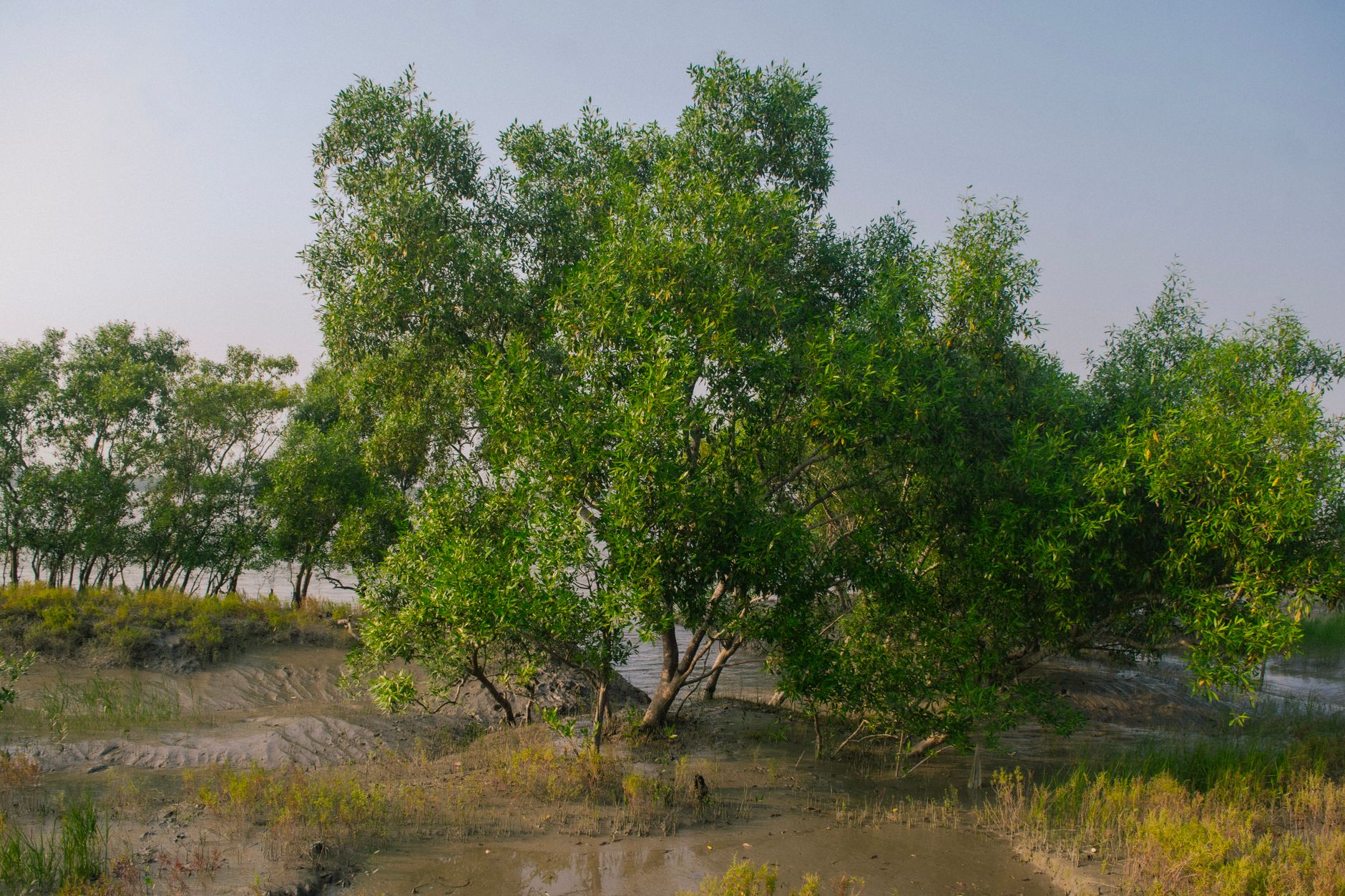
The Sundarbans is the world's largest mangrove forest, a delta of shifting mudflats, tidal creeks and salt-tolerant trees where the Ganges, Brahmaputra and Meghna reach the Bay of Bengal. The Indian portion is protected as Sundarban National Park, declared a UNESCO World Heritage Site in 1987, and managed as the Sundarban Tiger Reserve. It is a working forest and a populated landscape rather than empty wilderness. Around it lie villages, embankments, paddy fields and fishing channels that live with the same tides.
The delta works on tides. Water rises and falls twice a day across the creeks, and every boat movement is planned around that cycle. Mangroves hold the soft mud together with a tangle of roots and trunks, and that wall of trees blunts the storm surges coming off the bay. It is also a buffer: the forest takes the first hit of a cyclone before the water reaches the embanked villages behind it. Access is controlled for that reason.
Getting to the Sundarbans from Kolkata
The usual route from Kolkata runs south-east by road to Godkhali, also spelt Gadkhali, the main jetty at the northern edge of the protected forest. The drive takes roughly three hours, and traffic leaving the city or the narrow final stretch through market towns can add to it. Sonakhali is the alternative jetty used by some boats. A transfer arranged with the boat is the straightforward way to do it.
Suburban trains run to Canning, from where road transport continues to the jetties, but most visitors travel by road the whole way. Starting early matters, because boats do not run after dark and the last stretch is slow. Check Indian Railways for current suburban services. Anyone arranging the trip independently should confirm the jetty and the boat time with the operator the day before, and tie the transfer to the same dates as the permit.
Do you need a forest permit?
Yes. Entry to the protected forest is controlled and needs a permit from the West Bengal Forest Department. Permits are not bought at the jetty on the morning of travel. They are arranged in advance by the operator or lodge handling the trip, who will ask for names, dates and identity details. Rules, forms and office timings change, so confirm the current position with the department or West Bengal Tourism before booking.
A permit normally ties you to a named boat, a registered guide and a set of zones for specific days. Carry photo identification, and passports for foreign visitors, because applications ask for identity details. Some creeks and watchtowers close at short notice for wildlife reasons or after a cyclone. Treat the permit as the document that decides where you may go, not as a formality. Boats without one stay at the jetty.
- Apply in advance: Permits are arranged before travel; winter dates fill first and cannot be fixed on the day.
- Carry identification: Photo identification for every traveller, plus passports for foreign visitors, since the form asks.
- Registered guide: Forest rules require a registered guide aboard, and the operator supplies one with the permit.
- Check current rules: Forms, offices and timings change; confirm with the West Bengal Forest Department before booking.
How many nights does it need?
Two nights is the practical minimum, and three is better. The road journey takes a large part of the first day, and boats work to the tide rather than to a schedule you set. With two nights you get a full day on the water plus a second excursion on a different channel. With three you can add a village walk and a slower morning at Sajnekhali. One night means arriving, sleeping, one boat trip and leaving.
The delta rewards patience. Sightings build slowly, the light changes through the day, and a second excursion on a different creek is often better than the first. Longer stays also put money into villages that carry the cost of living beside a tiger reserve. Beyond three nights you need a specific interest, such as birdwatching, photography or a boat that goes deeper into the creeks. Shorter trips blur into the drive.
What happens on the water?
Boats are the only way into the creeks. Trips run from the jetties on the day's permit, usually with a forest guide aboard, and stop at watchtowers where you walk a short way on a raised path. Sajnekhali has an interpretation centre and a mangrove trail. Sudhanyakhali looks over a freshwater pond that draws animals. Dobanki has a canopy walkway above the mangroves. The boat itself is a viewing platform, with kingfishers, waders and mudskippers as constant company.
Do not expect a highway. Channels narrow, silt shifts after every monsoon, and the boatman reads the water rather than a map. Engines are cut near some zones so that animals are not disturbed. Going ashore happens only at designated points, and wandering is not allowed. Take what you need for a full day on the water, including drinking water, a hat and sun protection. Expect to sit in the sun for long stretches.
- Sajnekhali: The main entry point, with a watchtower, an interpretation centre and a short mangrove trail.
- Sudhanyakhali: A watchtower over a freshwater pond, one of the better places to wait quietly for animals.
- Dobanki: A canopy walkway through the mangroves, reached by boat and a short raised path.
When is the best time to go?
November to March is the comfortable window. Humidity drops, the sky clears and the light on the creeks is at its best. It is also the busiest period, when permits, boats and beds near the jetties come under pressure, so book well ahead. Mid-winter mornings can be cool on the water, and a light jacket is worth carrying even though the afternoons are warm. Fog can slow the road journey in the coldest weeks.
April and May are hot and sticky, with a chance of an evening storm. The monsoon, roughly June to September, brings heavy rain and cyclone risk, and the reserve is commonly closed to visitors for part of it. October is a month of transition as the rain tails off. Opening dates and weather warnings move, so check with the West Bengal Forest Department and the India Meteorological Department before fixing dates.
Will you actually see a tiger?
Probably not. Bengal tigers live in the Sundarbans in real numbers and are the reason the reserve exists, but they are shy, they swim well, and they are spread across a maze of tidal creeks. Most visitors see pugmarks, scat or an alarm call rather than an animal. Guides read the forest through deer barking, monkeys calling and birds going up suddenly. Those signs are the honest version of a tiger sighting.
The wildlife you can count on is smaller and closer. Spotted deer are common along the banks, rhesus macaques sit in the mangroves, wild boar root in the mud, and estuarine crocodiles bask on the dykes. Birdlife is rich: herons, egrets, kingfishers, raptors and waders on the mudflats, with more in winter when migrants arrive. At low tide the exposed mud is covered in mudskippers and fiddler crabs.
What rules apply in the reserve?
The Sundarbans is a protected reserve and a dangerous place, and the rules answer both facts. Stay on the boat or on marked paths. Do not swim, wade or step onto the mud, because the currents are strong, the drop is sudden and crocodiles are present. Do not feed animals, play music or make noise at watchtowers. Plastic and food wrappers go back with you. Guides and forest staff give instructions, and those instructions are final.
None of this is theatre. Silt banks look solid and are not. Crocodiles and snakes are common, and tides can strand a boat. The forest department is strict for those reasons. The delta is also home to people who fish and collect honey under permit, and their work continues while you pass through. Keep a respectful distance, keep your voice down, and do not photograph people without asking.
- No swimming: Currents are strong, the mud is soft and crocodiles are present, so stay aboard the boat.
- Take plastic out: Everything you carry in, including wrappers and empty bottles, comes back with you.
- Marked routes only: Watchtower paths are short and fenced; the forest beyond is closed to visitors.
- Quiet at watchtowers: No music, no drones and no shouting, since noise drives animals away from the water.
How do you book the trip?
Accommodation is in small lodges and village guesthouses near the jetties and forest villages, and on boats that carry passengers on a fixed itinerary. Book through a recognised operator or through West Bengal Tourism rather than arriving at the jetty and asking around, because the permit is tied to the operator and unlicensed boats cannot enter the reserve. Ask exactly what is included: meals, guide charges, permits and transfers.
Take cash, because card machines and mobile signals fail in the delta. Carry a torch, insect repellent, a basic medical kit, a power bank and a dry bag for electronics. Binoculars repay their weight many times over. Leave the city early, keep a buffer night in Kolkata before a flight home, and treat the trip as weather dependent, since a cyclone warning can cancel boats at short notice.
FAQ
How long does the journey to the Sundarbans from Kolkata take?
The road leg to Godkhali, the main jetty, is roughly three hours from central Kolkata, and traffic on the way out of the city can stretch that. A boat then takes you into the creeks. Most trips leave early and reach the forest by midday. Confirm the jetty and boat time with the operator the day before.
Do you need a permit to visit the Sundarbans from Kolkata?
Yes. Entry to the protected forest requires a permit issued by the West Bengal Forest Department, normally arranged in advance by the operator or lodge handling the trip. Permits are tied to a named boat, guide and set of dates. Rules and office timings change, so check the current position with the department before booking.
How many nights should you spend in the Sundarbans from Kolkata?
Two nights is the practical minimum and three is better. The road journey takes a large part of the first day, and boats work around the tide. Two nights give a full day on the water plus a second excursion; three allow a village walk and a slower pace at the watchtowers. One night is a long drive for very little.
Will you see a tiger in the Sundarbans?
Probably not. Bengal tigers are present in the reserve but are shy and spread across a maze of tidal creeks. Most visitors see pugmarks, scat or an alarm call rather than the animal itself. Spotted deer, monkeys, crocodiles and birdlife are far easier to see, and the watchtowers give the best chance of a sighting.
When is the best time to visit the Sundarbans from Kolkata?
November to March is the most comfortable window, with lower humidity and clear light on the water. It is also the busiest, so permits and boats need booking well ahead. April and May are hot, the monsoon from roughly June to September brings rain and cyclone risk, and parts of the reserve close. Check with the West Bengal Forest Department.
Can you visit the Sundarbans as a day trip from Kolkata?
Not comfortably. The drive to the jetty takes roughly three hours each way, and boats generally do not run after dark, so a day trip leaves very little time in the creeks. Two nights is the practical minimum. Anyone with a fixed onward date should keep a buffer day in Kolkata in case weather cancels a boat.
What should you take on a Sundarbans trip from Kolkata?
Binoculars, a hat, sun protection, insect repellent, a torch, a power bank and a dry bag for electronics. Take cash, since card machines and mobile signals fail in the delta. Carry out all plastic. Add a warm layer for winter mornings, and carry photo identification, plus passports for foreign visitors, since the permit asks for identity details.
Is the Sundarbans safe for visitors?
Boat trips with a registered guide and permit are the normal way to visit and are managed by the forest department. The hazards are real: strong currents, soft mud, crocodiles and fast tides. Swimming and wading are prohibited. Follow the guide's instructions, stay on marked paths, and keep away from the water's edge at watchtowers.
Which watchtowers can you visit in the Sundarbans?
Common stops are Sajnekhali, which has a watchtower, interpretation centre and mangrove trail; Sudhanyakhali, above a freshwater pond; and Dobanki, with a canopy walkway. Which towers a boat may visit depends on the permit and on current closures. Confirm the route with the operator and with the West Bengal Forest Department.
Read next
- Shantiniketan from Kolkata
- Best time to visit Kolkata: a month-by-month guide
- Kolkata in the monsoon: is it worth it?
Sources: West Bengal Forest Department, West Bengal Tourism, UNESCO, India Meteorological Department.
Editorial review: 3 November 2026. Opening days, fares and festival dates change; check before you go.