 4★
Dakshineswar Kali Temple, completed in 1855 under Rani Rashmoni and linked to Sri Ramakrishna, stands on the east bank of the Hooghly at the northern end of the Blue Line. A short ferry ride crosses to Belur Math, the Ramakrishna Mission headquarters founded by Swami Vivekananda. Allow half a day, dress modestly, and check ferry times at the ghat.
Why visit Dakshineswar and Belur Math?
Two riverside shrines on opposite banks of the Hooghly make one of the most rewarding half days in Kolkata. Dakshineswar is a working Kali temple completed in 1855 under Rani Rashmoni, and it is where Sri Ramakrishna spent much of his life as a priest. Belur Math, across the water, is the headquarters of the Ramakrishna Math and Mission. The pairing works because the boat ride between them is part of the day, not just transport.
The two sites ask different things of a visitor. Dakshineswar is busy, loud and full of local worshippers, with flower sellers and priests along the ghats. Belur Math is quiet, spread over lawns, and rewards slow walking. Doing both in one morning gives a contrast that a single temple visit cannot, and the ferry crossing ties them together. Allow half a day, and longer if a festival falls on your date.
How do you reach Dakshineswar?
The simplest route is the Blue Line of the metro to Dakshineswar, the northern terminus. The station sits a short walk from the temple gate, and the ride from Esplanade or Park Street takes a while but avoids road traffic. Travellers starting south of the Maidan can join the same line at Kalighat or Rabindra Sarobar. Check Metro Railway Kolkata for current timings, since services and station arrangements change.
By road, the temple is in the far north of the city, and a taxi or app cab from the centre is a long ride that depends entirely on traffic. Suburban trains to Dakshineswar station on the eastern side are another option. Many visitors combine the temple with a walk through North Kolkata's older streets before or after. The ghats and the riverside approach are part of the visit, so arrive on foot rather than by car.
What to see at Dakshineswar temple?
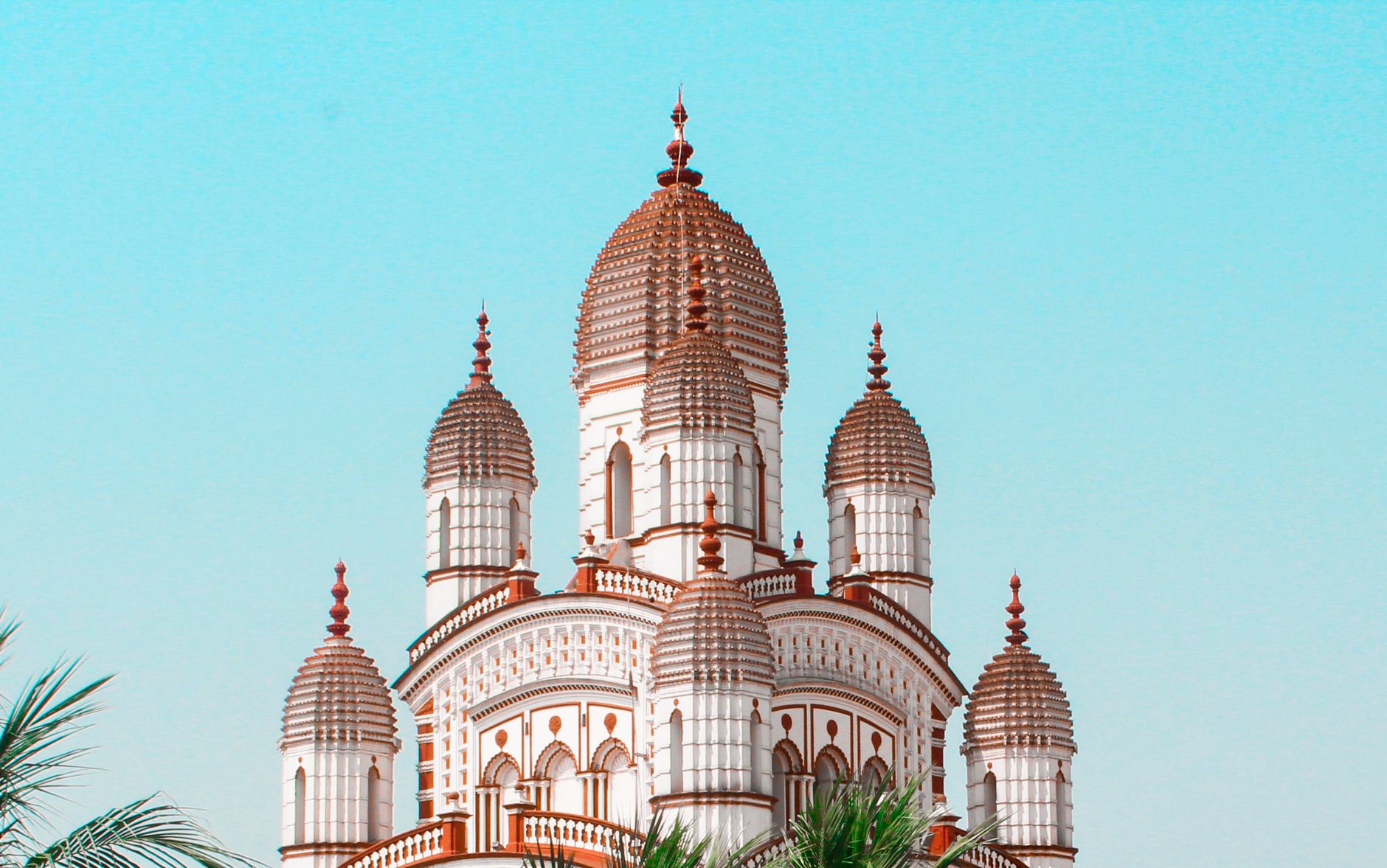
The main temple is a navaratna building, nine spires arranged over a stepped roof, with the square shrine at the centre and colonnaded walkways on three sides. The image of Kali stands inside, and the courtyard fills with worshippers through the morning and evening. The architecture belongs to Bengal's own temple tradition rather than the colonial classicism of the same century. Look up from the river side for the clearest view of the nine spires.
A row of twelve small Shiva temples runs along the river edge, each with a shikhara roof, built in the same period as the main shrine. Between them and the water are bathing ghats where pilgrims step down to the Hooghly. The riverfront is the reason the site works as a place to sit rather than hurry through. Allow an hour at least for the temple and the riverfront together.
- Main shrine: Nine-spired navaratna temple holding the Kali image, with colonnaded walkways around the courtyard.
- Shiva row: Twelve riverside shrines with shikhara roofs, built alongside the main temple in the 1850s.
- Bathing ghats: Steps down to the Hooghly where pilgrims wash before worship; keep clear of the water's edge.
- Flower stalls: Sellers outside the gate supply red hibiscus and garlands for offerings.
How does the ferry to Belur Math work?
Boats cross the Hooghly between the Dakshineswar side and Belur Math, a short hop on the water that lands close to the math's main gate. Services are run by the ferry operators and by the math's own arrangements, and timings shift with the season, the tide and the light. Confirm the day's sailings at the ghat before committing to the crossing. The river is tidal here and the current is strong, so the crossing is short by design.
The crossing itself takes only a few minutes, but it sets the pace of the day. Sit on the open side for the view back to the temple spires. Life jackets and boarding arrangements vary by boat, so follow the crew. Landing at Belur Math puts you at the edge of the grounds, with the main temple a short walk inland.
If the ferry is not running, the road route between the two banks is long, crossing either Howrah Bridge or Vidyasagar Setu and doubling back through traffic. That makes the boat the practical choice as well as the pleasant one. Check current crossing arrangements with West Bengal Tourism or at the ghat on the day, since river services change.
What happens at Belur Math?
Belur Math is the headquarters of the Ramakrishna Math and Mission, founded by Swami Vivekananda, and it remains a working monastic centre rather than a monument. The main temple blends motifs from Hindu, Christian and Islamic architecture in a single building, which is the detail most visitors come to see. The grounds run along the river, with lawns, a bell tower and several smaller shrines. Silence is expected in the prayer halls.
The site is also a centre of learning, with a college and a library on the grounds, so parts of the campus are not open to casual wandering. Most visitors see the main temple, the shrine to Swami Vivekananda and the riverfront. Weekday mornings are the calmest. Festival days draw large crowds, so check the math's own notices before travelling. Allow at least an hour, more if you sit by the river.
- Main temple: Blends Hindu, Christian and Islamic motifs; the reason the math is known beyond Bengal.
- Vivekananda shrine: Holds the relics of Swami Vivekananda and sits within the main campus.
- Riverfront: Lawns and steps above the Hooghly, quiet in the morning and popular at dusk.
- Monastic life: A working mission centre; keep voices low and stay out of closed buildings.
What are the rules and etiquette?
Both sites are places of worship first. Dress modestly, covering shoulders and knees, and remove shoes before entering shrines and courtyards. Photography is not allowed inside the sanctums, and in parts of Belur Math it is restricted altogether. Follow what the priests and volunteers say rather than what other visitors are doing. Keep voices low, put phones on silent and avoid turning a shrine into a backdrop for posed pictures.
Queues form at the main shrine at Dakshineswar during morning and evening worship, and pilgrims often come first. Non-Hindu visitors can usually walk through the courtyard but not enter the innermost sanctum. At Belur Math the grounds are open to all, and the atmosphere is calmer. Allow that the mood changes with the hour: both places are busiest around the evening arati. Check current rules with the temple authorities on the day.
- Dress: Cover shoulders and knees at both sites; a light scarf is useful in either season.
- Shoes: Leave footwear at the counters or racks before shrines, courtyards and prayer halls.
- Cameras: No photography inside the sanctums; rules are posted and volunteers will point them out.
- Offerings: Flowers and sweets are sold outside the gate at Dakshineswar; buy there rather than inside.
When is the best time to go?
October to March is the comfortable stretch, with cool mornings and dry days, and the walk along the ghats is pleasant. April and May are hot and humid, and the temple courtyard offers little shade. The monsoon brings heavy rain and a swollen, fast Hooghly, which can interrupt the ferry. Winter mornings can be hazy, so late morning often gives the clearer light on the water. Check the forecast with the India Meteorological Department.
Start early. Dakshineswar is at its liveliest in the morning, and the ferry crossing is easier before the afternoon builds. Festivals change everything: Kali Puja on the new-moon night of Diwali, and the five main days of Durga Puja, bring vast crowds to the riverside. If quiet is what you want, avoid those dates and check the current year's festival calendar. Weekdays are calmer than Sundays at both sites.
Light matters here. Morning is the better half of the day for the temple courtyards, and the river is at its best before the haze thickens. If photography is the aim, remember the restrictions inside shrines and keep the camera for the ghats and the water. A winter morning can be hazy, so a later start is often better between December and February.
What else is near the two sites?
Dakshineswar sits at the top of the Blue Line, so the rest of North Kolkata is on the same run. Shyambazar, Sovabazar and Girish Park are a few stops south, with the old merchant houses, the Marble Palace and Jorasanko Thakurbari within walking distance of the line. Kumartuli, the potters' quarter, is busier from July to September when Durga idols are being made. Allow a separate half day if you want to see those properly.
On the Howrah bank, Belur Math is close to the Botanic Garden at Shibpur, home of the Great Banyan, founded in 1787, and both can be done in one outing if you start early. Howrah Bridge and the Mallick Ghat flower market sit further downstream. The return to Park Street or Esplanade is a straightforward metro ride from Dakshineswar, but the distances are real, so plan two stops rather than four.
Hotels in North Kolkata
For Dakshineswar & Belur Math, the nearest hotel area is North Kolkata, with 13 stays in the IMPT hotel database. Listed 5-star first, then 4-star, then by guest score; live prices open in the IMPT app.
4★ 3★
OYO Flagship 19290 Bag Bazaar
North Kolkata, Kolkata · 3-starGuest score 3.9/5 · 281 reviewsSee live price 3★
Goroomgo Elite Inn Ultadanga Kolkata
North Kolkata, Kolkata · 3-starGuest score 2.2/5 · 6 reviewsSee live price 3★
 3★
 3★
FAQ
How long should you allow for Dakshineswar and Belur Math?
Allow half a day for both, with roughly an hour at Dakshineswar for the main temple, the row of Shiva shrines and the ghats, then the ferry, then an hour or more at Belur Math. Adding the Botanic Garden at Shibpur or a North Kolkata walk turns it into a full day.
Do Dakshineswar and Belur Math charge for entry?
Both sites are free to enter for general visiting, and neither sells a ticket at the gate. Special ceremonies and some festival arrangements may involve a fee, so ask the volunteers. Flowers and sweets for offerings are sold outside the temple gates, and small change is useful.
Can non-Hindu visitors go inside Dakshineswar temple?
Non-Hindu visitors can enter the temple complex and usually the courtyard around the main shrine, but not the innermost sanctum, where worship continues. Rules are applied by the temple authorities and can vary on festival days. Dress modestly, remove shoes, and follow any instruction from priests and volunteers at the gate.
How do you get from Dakshineswar to Belur Math?
A ferry crosses the Hooghly from the Dakshineswar side to Belur Math, landing near the math's grounds, and the crossing is short. Services and timings change with the season and the tide, so confirm the day's sailings at the ghat. If boats are not running, the road route via Howrah Bridge or Vidyasagar Setu is long.
Is photography allowed at Belur Math?
Photography is restricted at Belur Math. It is not allowed inside the shrines or the prayer halls, and parts of the campus are closed to cameras altogether. Notices at the gates set out what is permitted on the day, and volunteers will point out the limits. Ask at the gate before photographing anywhere on the campus.
What should you wear at Dakshineswar and Belur Math?
Wear clothes that cover shoulders and knees, for both men and women, and choose something you can sit on the floor in. Shoes come off before shrines and courtyards, so footwear that slips on and off is practical. Both are working religious centres, not sightseeing attractions, and modest dress is expected.
When is the best time of day to visit Dakshineswar?
Early morning, when worship begins and the courtyards are at their most active, is the best time at Dakshineswar. The ferry crossing is also easier before the afternoon builds. Evening worship draws crowds again. Between December and February, a later start avoids the winter haze that can sit over the river.
How do you reach Dakshineswar by metro?
The Blue Line runs from Dakshineswar in the north to Kavi Subhash in the south, through Shyambazar, Esplanade, Park Street, Maidan and Kalighat. Dakshineswar is the northern terminus, a short walk from the temple gate. Check Metro Railway Kolkata for current timings and any service changes before setting out.
Are Dakshineswar and Belur Math open every day?
Both are generally open daily, with hours that shift by season and around festival days, so check with the temple authorities and the Ramakrishna Math before travelling. Belur Math is a working monastic centre, so some buildings and areas stay closed to visitors at particular times. Early morning and late afternoon are the safest windows.
Read next
Sources: West Bengal Tourism, Metro Railway Kolkata, Ramakrishna Math and Mission, Dakshineswar temple authorities.
Editorial review: 3 November 2026. Opening days, fares and festival dates change; check before you go.